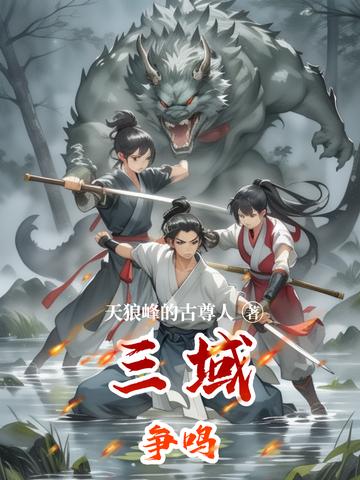
"Contending in Three Realms" tells the story of the counterattack legend of Xiao Yanbai, an ordinary blacksmith apprentice. He accidentally obtained a blue spiritual crystal in Qingya Mountain, awakened a rare multi-element resonance constitution, and was admitted to Guangming Academy under special circumstances. When he first entered the academy, he was questioned by noble students because of his civilian status. However, he activated four elemental totems at the same time in the elemental affinity test, causing an uproar.
Campus life is full of dangers: roommate Su Xuanjin has a secret meeting with the Shadow Council late at night, a chaotic beast circle drawn by a missing student suddenly appears in the forbidden book area, and the warning in ancient books that "users of the Chaos Crystal will eventually be swallowed by power" is shrouded in dark clouds. Accompanied by his friends Yun Qiwu, Shen Jinghong, and Luo Qianci, Xiao Yanbai practiced hard skills to cope with the challenges of school fighting, while getting involved in the conspiracy vortex of the shadow forces.
When the academy formed a team to perform a mission in the Black Miasma Forest, crises such as a sudden attack by piranha flowers and loss of control of thunder magic ensued. Everyone developed an amazing tacit understanding amidst the dangers. And as the secrets of the spiritual crystals are gradually revealed, the power disputes in the Three Realms Continent have surfaced - the game of light and shadow, the balance of elemental laws, and the threat of ancient giant beasts will all cause turmoil due to Xiao Yanbai's special physique. An adventure related to the survival of the world is slowly beginning from the blue light in the young man's palm.
Reader comments
Book review of "The Contest of Three Realms": A dark epic of the dance of power and hope.
Zhengming uses the three-domain melee as a chessboard, weaving elements, machines and shadow seals into an airtight web of conspiracy. The most touching part of the story is the portrayal of the "Broken Ones": Yun Qiwu's lightning emblem is the double-edged sword of redemption and betrayal, the dual personality in Luo Qian's porcelain mirror is a living container of experimental tyranny, and the nameplate fragment in Su Xuanjin's palm is the symbiosis of blood and hatred. These characters are like marionettes nailed to gears, struggling to find the anchor of humanity in the maelstrom of machinations.
The battle scene is full of visual impact: the interweaving of lapis lazuli and purple when the "Thunder Fire Split the Sky" cuts down, the light and shadow of the chain that purifies pollution from the three-element matrix, the superposition of the metal friction of the gear trap and the warning sound of the Psylocke turn the words into dynamic images and explode in the mind. The mirror duel in the spiritual rift is even more profound. The black blood spiked by the demon-killing gun and the control chain of raven feathers quietly cut open the core of "weapons are original sin".
The best thing is that the image of hyacinth is used throughout - from the suffocating feeling among the rotten leaves in the opening chapter, to the blooming that breaks through the pollution in the final chapter, implying that hope is never a gift from God, but a fruit watered by the bones and blood of the oppressed. Zhengming retains the glimmer of humanity in the dark tone, and uses high-density foreshadowing and delicate emotions to allow readers to witness how broken souls piece together the courage to resist in the blood and fire of the three realms. This is not only a battle between realms, but also a magnificent elegy about redemption and awakening.
Book review of "The Contest of Three Realms": A dark epic of the dance of power and hope. Zhengming uses the three-domain melee as a chessboard, weaving elements, machines and shadow seals into an airtight web of conspiracy. The most touching part of the story is the portrayal of the "Broken Ones": Yun Qiwu's lightning emblem is the double-edged sword of redemption and betrayal, the dual personality in Luo Qian's porcelain mirror is a living container of experimental tyranny, and the nameplate fragment in Su Xuanjin's palm is the symbiosis of blood and hatred. These characters are like marionettes nailed to gears, struggling to find the anchor of humanity in the maelstrom of machinations. The battle scene is full of visual impact: the interweaving of lapis lazuli and purple when the "Thunder Fire Split the Sky" cuts down, the light and shadow of the chain that purifies pollution from the three-element matrix, the superposition of the metal friction of the gear trap and the warning sound of the Psylocke turn the words into dynamic images and explode in the mind. The mirror duel in the spiritual rift is even more profound. The black blood spiked by the demon-killing gun and the control chain of raven feathers quietly cut open the core of "weapons are original sin". The best thing is that the image of hyacinth is used throughout - from the suffocating feeling among the rotten leaves in the opening chapter, to the blooming that breaks through the pollution in the final chapter, implying that hope is never a gift from God, but a fruit watered by the bones and blood of the oppressed. Zhengming retains the glimmer of humanity in the dark tone, and uses high-density foreshadowing and delicate emotions to allow readers to witness how broken souls piece together the courage to resist in the blood and fire of the three realms. This is not only a battle between realms, but also a magnificent elegy about redemption and awakening.