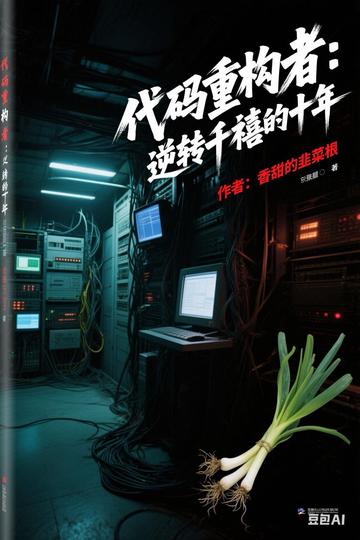
In 2024, AI healthcare entrepreneur Lin Shen faces the liquidation of his company and the collapse of his marriage amid a capital winter. Then, on a stormy night, a mysterious piece of code sends him transmigrating back to the year 2000. Returning to a Beijing newsstand in the body of his twenty-year-old self, with a headline from Computer News announcing “China's Internet Users Surpass 10 Million” in his hands, he sets a twenty-year technological comeback in motion.
Starting with a cardboard stall offering “free computer assembly” at the Haidian Book City, Lin Shen uses his knowledge of the future to modify hardware and plant a system backdoor. With the 800 yuan he raised by selling his blood, he makes his first fortune. He heads to Hangzhou's Lakeside Garden and buys the source code for Jack Ma's China Pages team for 200,000 yuan, bringing forward the launch of “ShenGou.com” and the “Deep Blue Pay” payment system. In Shenzhen, he crosses paths with Zhang Xiaolong and deliberately leaks the idea that will become WeChat. He joins forces with Lei Jun to build Xiaomi phones preloaded with their own operating system. Even as Android's open-source wave sweeps the world, he insists on developing the homegrown “Star Trail OS” from scratch, determined to leave China's technological roots in the mobile internet era.
Yet the closed loop of time conceals a mystery…
Spanning the golden decade of the new millennium, this entrepreneurial epic uses code as a blade to slice through the folds of time. Caught between capital bubbles and technological monopolies, it portrays a dreamer who refuses to take shortcuts. When ginkgo leaves fall again in Zhongguancun in 2010, the medical AI framework written by the newsstand boy overlaps with images from his final days twenty years later. At last, the ultimate question of technology's human touch and the ethics of time will be answered: rewriting code is, in truth, about rewriting the relationship between people and the future.
It's exhausting and brain-burning to watch.