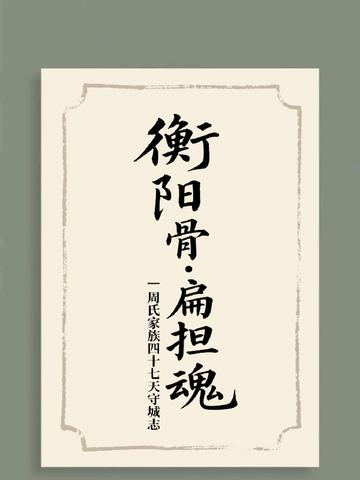
Laoshan scout silently knelt in the courtyard of the old house in Hengyang, and the gun cocoon in his palm touched the fragments of the mulberry wood pole in 1944 - the blue bricks with the "Governing the Road Ke Zun" pattern hide the overlapping fighting souls of four generations: my great-grandfather's pole once swept the Japanese army's steel helmet, my grandmother's rice bucket was engraved with a secret passage map, my father's theater ticket stub and the coordinates in her silver ring pointed to the last line of defense on August 7, 1944.
Camouflage uniforms and gray cloth gowns overlapped in the heavy rain, and the feel of mine clearance and mine detectors turned into the silver light of the village guard team's weaving shuttle. When the landmark of Huiyan Peak was marked red on the retina, the secret passage revealed between the lotus petals in "The Story of Love Lotus" made her instinctively assume a shoulder-carrying posture - this is the backbone of business, and it is a fighting posture engraved in her bones and blood. The memory of Laoshan's booby traps is mixed with the pain of 1944. In the courtyard where there was a power outage, Hanchengong's roar resonated with the company commander's order: "The soul of the Zhou family is on the tip of the pole!"
From the Silk House in Northern Hunan in 1938 to the Laoshan position in 1984, double cocoons were stacked on top of each other, and mulberry wooden poles carried out the dual missions of trade routes and battlefields. The forty years spent folding in the Jie Pai porcelain puddle were finally condensed into the city-defending aspirations on the blue bricks of Hengyang - with bones stronger than porcelain and a soul tougher than wood, the life and death contract between the family and the city across time and space was continued.
The story is good👍, worth reading!