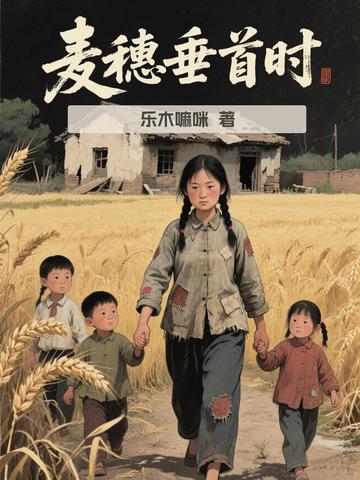
In the winter of 1974, in a barren village, 16-year-old Li Guoxing became the only support for her four younger siblings after her deaf-mute mother died of illness. The infant girl died of hunger, the father had a poor family background due to historical issues, and the 19-year-old brother broke up with the family angrily after his marriage failed due to family background issues.
From that day on, Li Guoxing's thin shoulders carried the weight of the entire family. She is like a stubborn wheat, growing hard on the barren land. In order to marry her brother, she sacrificed her life's happiness and married a thin and incompetent stranger; in order to feed her younger brothers and sisters, she gnawed tree bark and stole food; in order to protect her second sister, she picked up a shovel to fight against her brother-in-law who was violent towards her second sister; see With her cousin who grew up with her, she died in love in order to win back the man who cheated on her. Her uncle had a white-haired man and gave him a black-haired man. She also had to hide it from her grandma. In order to give birth to a son, she hid in the cellar, but she lost the son who she had managed to give birth to after hiding in labor...
After decades of ups and downs, the younger brothers and sisters have their own lives - the second sister married a veteran, the second brother married a good wife, and the youngest brother joined the army and rose to the top, but gradually became estranged from his family. Li Guoxing's marriage was full of disasters. Her mother-in-law's difficulties, her husband's cowardice, and the pain of losing her children one after another could not crush her. She is over 70 years old. Her children are filial in her later years and she lives a happy life. However, her younger brother's indifference has become a thorn in her heart that cannot be removed.
This is a story about sacrifice and resilience.
She is the epitome of countless "eldest sisters" of that era.
It is the deepest mark left by history when it passes over ordinary people.
Yes, the story is vivid and vivid