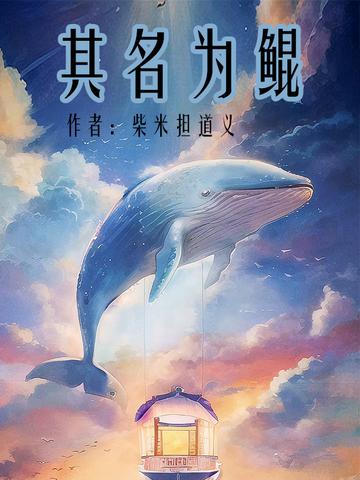
Climatologist Tian fell into a crevice in the Arctic ice and traveled to the dusk of civilization 120,000 years later. In this apocalyptic world where the ocean covers 92% of the earth's surface, humans wander in flying houses pulled by genetically modified mechanical Kun fish, and the entire society is shrouded in the collective melancholy of "the end of gentleness." Tian gets acquainted with the Kunzhou pilot Cang, who has a quartz lens embedded in his left eye, and discovers that this civilization actually decided to annihilate itself through a referendum - the ultimate perfection stifled the possibility of evolution.
The two broke into the fish-tail ark on the bottom of the sea and witnessed the shocking ceremony in which one hundred thousand dormant people were transformed into the culture medium of a new civilization. When Tian's genes are confirmed to carry the observer's mark, she must make a choice under the quantum surveillance of the Guixu system: follow the fate of civilization reincarnation, or infect new humans with the "erroneous genes" deleted by the system - art, impulse and irrational love. As the obelisk of civilization in space disintegrated, Tian and Cang's consciousnesses merged and separated in the quantum state, and finally piloted a biological spacecraft made of singing coral, leading new humanity to break through the closed loop of time and space like a Mobius strip.
This work uses a magnificent biomechanical setting to explore the philosophical proposition of the survival of civilization. In the doomsday picture composed of flying whales and crystallized oceans, it asks whether the most precious marks in life are those "imperfect" marks.