Stats
Tags
Synopsis
Reader comments
In booklists 10
Nobel Prize for Literature, Mao Dun Literature Prize, Lu Xun Literature Prize and Other Literary Works
I want to read a book similar to "One Sentence is Worth Ten Thousand Sentences: Collector's Edition".
Masterpiece! ! ! a Chinese and Foreign Classic Book! ! !
Psychology! ! I Really Like It, Please Read It! Girls Like Psychology
I want to read a book like "Murphy's Law: Learn a little bit of psychology every day". Please recommend some psychological articles. I really like them. I hope to recommend some psychological books. I really like to read them. Please, guys! ! !
Chemistry Books, Psychology, Mathematics Books, English Books, Physics
Simpler
A Must-Read for Chinese Language and Literature Majors
Are there any books that can actually help improve your writing and expression skills?
Nice Masterpiece
It's not just foreign or Chinese, it doesn't matter, as long as it's beautiful and meaningful

Literature Books, I Want Literature Books! ! !
Family members, I want to read literature books, books that can improve my writing skills or increase my knowledge. Beg on your knees!
Classic Literature, Masterpieces, Put Them on the Bookshelf and Read Them Slowly
I want to read books similar to "The Dust Has Settled (Mao Dun Literature Award Winner)". Recommended to each other, classic literary novels. A masterpiece with depth and aftertaste. A book that makes people want to read it again and again. When you encounter difficulties in life, remembering the teachings in the book can help you

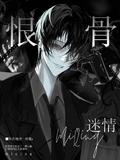

Hate Haiqingtian! ! !
I want to see how I hate the sea and love the sky. I hate that the love is not complete and that the love is not complete. The pretense is mixed with a trace of sincerity, and the sincerity is mixed with a trace of pretense. I hate that the bright moon is high and does not shine on me alone. I hate that the bright moon is high and does not shine on me. I hate that the bright moon is high and does not shine on me. Is there any text with this setting? !




Looking for Books Suitable for Students in the Second and Third Grade of Junior High Schoolᶻz ₍^_ ̫ _^₎
Now that I'm in my second year of junior high school, I'll look for some academic or literature books, which cover all subjects, preferably ones that junior high school students can understand.
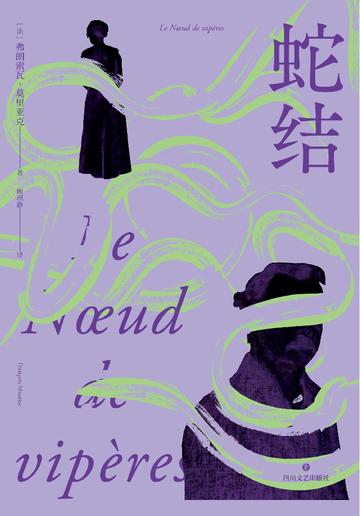
Friends who love watching and hating Haiqingtian👏🏻👏🏻👏🏻 Walk by, pass by, don't miss it, the word "hate" runs through the whole text, as the protagonist said, "For a long time, I feel that hatred is the most surging emotion in me." Due to his low self-esteem, stubbornness and suspicion, Louis was swallowed up by the overwhelming hatred and decided to take revenge on his family. Regarding his wife Isa, he hated her for being silent, hated her for being indifferent to him, hated that she only saw children, and hated her for not loving him. In fact, this is not the case. In fact, they both love each other, but they have never fallen in love for various reasons. It was not until he was about to die and the two of them were separated by Yin and Yang that he realized that "it turned out that I had also blown up a pool of her heart", but it was too late. Because she felt that the child had taken away all of Isa's attention, her hatred spread to her children. He hated them for taking away Isa's attention, and hated them for coveting his property. However, love is like a piggy bank. If you don't put it in, you can't take it out. Louis ignored his children when they were young, so how could he expect his children to love him? They just kept plotting against each other, and it wasn't until Isa's death that he untied the knot in his heart. The author's writing style is exquisite, and he portrays Louis' complex psychology deeply. The translator has given full play to the "elegant" in "faithful and elegant". All in all, recommended reading.
Life is like a dream, how much joy is there? Hate lasts longer than love, but love can give people liberation. "It turns out that I once wrinkled a pool of her heart", an extremely beautiful translation, Ya!
I didn't expect it to be a work of this style. While reading, I occasionally read book reviews, and I felt like I had strayed into a fandom, but it shouldn't be that serious. Many people have been attacking the male protagonist - although he does have many areas where he can be attacked - as long as someone asks doubtfully or expresses opposition to his views, they will be retorted with words such as "I hope you have someone like the male protagonist next to you"... However, I still saw a very interesting point of view in the comment area. First-person works should be viewed with suspicion. This perspective itself has limitations. In short, everyone inside has a feeling that poor people must be hateful? "He who has no conscience and no virtue cannot suffer."
This Nobel Prize winner's work is written in the form of an epistolary letter, telling the story of a long letter of accusation written by the old miser Louis to his wife at the end of his life. In fact, it is a journey of cutting open the self and facing the "snake knot" of the soul. "Snake knot" is the most exquisite image in the book - the viper entrenched in the heart, which is not only the embodiment of hatred, jealousy and greed, but also the protagonist's self-enclosed spiritual cage. Throughout his life, Louis was trapped in resentment towards his wife, hatred towards his children and obsession with money. "My youth was just a long suicide." He is not a born evil person, but because of his extreme low self-esteem and insecurity, he armed every soft moment with malice. This twisted mentality of "the more you hate it, the more it reveals its ugliness" was deeply portrayed by Mauriac. The power of the novel lies in its unpretentious self-analysis. Louis' monologue is full of contradictions: he hates his family but longs to be loved; he regards wealth as a fortress, but in the end he discovers that "his heart does not revolve around the treasure"; he curses his marriage, but only after his wife's death is he shocked to discover the love buried beneath the hatred. With scalpel-like strokes, Mauriac cuts open the most subtle folds of human nature - not only do we see the meanness of an "old crocodile", but we also see how he personally twists every relationship into a knot. The epistolary narrative strategy is profound. This "delayed suicide note" became Louis' only salvation channel. In writing, he honestly examined his life for the first time. When he says, "I became a prisoner of my own obsession," the snake's knot finally loosens. At the ending, his wife passed away before him, and the setting of the unread letter adds to the tragedy: reconciliation is always one-sided, and redemption comes too late. This work is often seen as a mirror image of The Narrow Gate. If "The Narrow Gate" is the ultimate sublimation of faith, "Snake's Knot" is the deep fall into the darkness of human nature. But they both reach the same goal by different routes - both reveal that people spend their entire lives fighting against self-perception. Louis' tragedy lies not in his fate, but in his "refuse to look for other possibilities outside of the snake's knot." The reading experience is like sitting on pins and needles, but I am attracted by the profound psychological truth and the translator's poetic language. It reminds us that it is never other people who trap us, but the viper knot in our hearts that is unwilling to be untied. Only the courage of self-reflection can cut off this fatal entanglement.
A lawyer who was cold to the point of death made a thorough and unreserved confession of his heart. At the end of his life, the background was a fight for inheritance with his children based on hatred. It was also a memory, showing the resentment of a lonely person who longed to be understood and loved.
My favorite part of the whole text is the section between Marinette and Louis. The details are described very vividly and delicately, and the overall atmosphere is well controlled by the author: when it comes to emotions, when it comes to politeness. At the end of a paragraph of emotional resonance and ambiguity, it is shown that Louis is still thinking of Isa, and the article is brought back to the love and hatred between the male and female protagonists. It is also written in a very literary way. At the end, the mention of little Marie strengthens the father's love and purifies the relationship between Louis and Marinette. The mention of the priest's praise makes Louis redeemed by guilt, which clearly highlights Louis' character trait of low self-esteem and longing for recognition. And Marinette really has a rebellious spirit, and the red rose paired with the widow is very brave.
Although the family is obviously rich, they are always dissatisfied. Although they are obviously favored by their mother, they have infinite self-esteem. The absence of his father made Louis insecure and mean, and he could only see the bad side of things. He has neglected his wife for a long time, and they do not understand each other, which deepens the conflicts within the family. The children who grow up in this environment are also selfish. Louis had different feelings for Marie and Luc. He thought he could forget them, but this feeling had deeply affected him, and others thought he was ruthless and meaningless. It was not until the end of his life that he realized that his wife had longed for his love and was even jealous of Marie and Luc. The religious children were greedy for property, and Louis tried to destroy it all. Revenge and hatred are like snake knots, they cannot be opened, they can only be cut off, but the pain is only for him, because he has woken up and let go, while the next generation is still going on...
I finished reading Snake's Knot in 10 days I have a clearer understanding of the saying "Character determines destiny". I remember first applying this saying to Mrs. Xianglin, and then to myself. Regarding Louis, I did not mourn his misfortune, but was angry at him. There was no hatred in the words after Isa's death. He found that his wife wanted to get close to him from beginning to end, but he was the one who kept everyone away. He lives in his own fantasies or the way he expects others to treat him, in order to vent his inner discomfort. He puts a cover around himself. He is like a fly and wants to change, but his inner contradictions pull him into the abyss, pull out the carrot and bring out the mud, and his hatred increases. I think it was his character that got him, it sounds like an excuse for shameless behavior. Every time I put myself under Louis' cover and feel the same, do I really feel the same? I thought again of the line from "The Narrow Gate" "The further I am from you, the more I love you." Issa died. This woman who was criticized by Louis during her lifetime was buried underground with half a century of incomprehension. In the last days of Louis' life, he changed. At this time, he was lucky and sad. The sad thing is that after spending his whole life immersed in self-hate, he finally bursts the bubble he blew. He will probably feel unworthy and hate his own actions. Fortunately, he recognized himself, and with the last remaining warmth of his body, he tried to accept this world without the self-filter. I tried to sort out the knots in my heart, but the contradictory thoughts prevented me from doing anything. Fortunately, I saw the essence clearly. Next time I encounter it, I will explain it better and not put myself in a box. . ? .
It's like watching your own monologue. The writing is penetrating, the emotions are sincere and delicate, real and not artificial.
1. The translator's translation level is very high and his literary skills are very strong. Does anyone know who he is? Why is there no label🤔 2. The psychological description and environmental description are both worth reading. The analysis of human nature is real and profound, and the language is vicious. The third point is a bit of a spoiler, if you don't mind you can read it↓↓ 3. The protagonist's rebellion and contempt for his mother did make me feel tight-chested and short-of-breath, but this confession is mainly about him, his wife, and his children and grandchildren. The relationship between him and his wife was full of hatred, but it was too late to discover the vague love for each other at the end of their lives. "Snake Knot" is not just that he regards his heart as a "Snake Knot", I think there is another layer that the emotions between him and his wife (a large part of hatred and a small part of secret love) are intertwined into a "Snake Knot". He is not heartless and unjust. He has not learned to love but is too eager to be loved. He has low self-esteem and is also arrogant. It was not uncommon for him to see his children draining their parents without caring about their life and death, and he deeply hated it. Therefore, the children's profit-seeking, misunderstanding, hatred, and stupidity made him physically and mentally exhausted. Regarding the disposal of the inheritance, he went through a lot of thinking and struggle in his heart, and finally gave most of it to his children. This also implies that he has become more enlightened and physically weaker. That's all. I highly recommend everyone to read it. ٩( 'ω' )و
This book is from a first-person perspective, so it will be very instructive. Is my wife really that bad? Of course not. People will have their own biases when telling something, deliberately concealing or beautifying themselves. The male protagonist is dark and cold, highly sensitive to the point of being unreasonably arrogant. The plot alone is an extremely simple story, and some of the descriptions are also very detailed. Dark thoughts were like a snake knot, binding his heart, but more often than not, he just pretended to use this "snake knot" to hurt others to protect himself. Sometimes while reading, I will be impressed by the author's exquisite words and sentences, and I am very good at writing. Then the next second, either the thread will control the writing, or the male protagonist's sudden darkness and indifference will occupy the entire mood and attack the people around him. Some of the male author's stereotypical female images are really funny to watch, but when I think about this book being written in 1932, haha, it doesn't sound very old at all. Underneath the broken family relationship are complicated emotions. What is the wife's fault? After decades of indifferent treatment, he even lost his youngest daughter Mary because of the stinginess of the male protagonist. Will his wife's death really change him? Or is he taking advantage of the rare guilt in his conscience to perform? Or is it a rare display of true feelings? The snake knot seems to embody the darkness of the male protagonist, but it seems to be just that. Everyone has their own snake knot, but whether it can be untied is ultimately a personal life issue.
A vicious, selfish, indifferent businessman, but the author shows us another side of him, a poor man trapped in hatred, money, and material desires all his life. He longs for love and family affection, and the love of others, but uses silence to express dissatisfaction and hurt to resist neglect. The author's writing style is so delicate that it makes people stunned. After reading the whole book, I remembered something similar written by Shi Tiesheng, "Only love is the only salvation."
The first-person writing can very well represent Louis' psychology, and the mental journey is also written with twists and turns. With the ups and downs of love and hate, it will always change the decisions made by people in an instant. I think Louis is a person with low self-esteem and arrogance. He is obsessed with Isa's past ambiguity, imagining the unfinished words and feelings, and finally believes that Isa's love for him is false and is for his money, but this is the first time in his life that he has experienced the feeling of being loved. Except for his mother, this person never received any preference, but his pride did not allow him to speak out. Suspicion and silence competed with each other for half a century. Because of the dispute between the two, the children were also affected and ignored (only if parents love each other can children be happy). Louis fought alone almost all his life. Except for his beloved Marie and Luc, he rarely showed his care and kindness. On the eve of death, he finally felt helpless and left his inheritance to his children. But I hate everything about Bell and his sister, when they fight for the family property, when they argue with others, when they are stubborn and stubborn. Does the end of life mean the untying of the snake's knot? Was it the family's care and Louis' relief that untied the snake's knot? I think everyone has their own answer. After thinking about it, I think it's still five stars.
This book made me fall in love, it's so beautiful. He accurately analyzed a despicable, jealous but sensitive heart, which is the best part. It was the lawyer Louis who kept shouting that before his wife died, she would squander all the money and not keep a penny. But in fact, he didn't even feel it when he was his wife. I no longer want the money at all. All stinginess, all that he treasures. Even after his wife died, it seemed meaningless. His wife did not really wait for his apology until her death. It was only after his wife's death that Louis realized that his wife was not what he wanted for them, that she did not love him and did not care about him. It seemed that this sad heart was disintegrated at once. He stubbornly walked into the snake knot that he had woven, and used indifference and stinginess to create a barrier between him and everyone, just like a hedgehog. He was extremely convinced that no one loved him. But he has a soft side of humanity, and I don't think he is a heinous person. He was even said to be a good person, not the most evil person. I really think that his children are not very good, they are not filial but mercenary. He has a pursuit of kindness and beauty, which can be reflected in Mary and his nephew, not to mention his love for his granddaughter at the end. He is complicated, but there is no doubt that he has this heart. It's just that before his wife died, he had been stuck in this knot of his own heart and couldn't get out. All in all, this is a good book that very truly shows a dark person's true yearning for truth, goodness and beauty, but he uses hatred to build walls in his heart.
I think the male protagonist has not had a father since he was a child, and his mother is very doting. In fact, being overly doting is also a form of neglect, that is, he doesn't care what's wrong with you, he can do whatever he wants, and he can do whatever he wants. So I can understand why the male protagonist hates his mother. Because only his mother loves him unconditionally. Let him develop this kind of self-centered character from an early age, never caring about other people's feelings and thoughts. Then without his father's company, no one taught him how to love others and how to express his true feelings. Maybe it's because my family is too rich. So the mother will feel that meeting her material needs is enough. As he grew up, he discovered that no one except his mother was kind to him without any purpose. All love is conditional, plus he is very rich. So he hates his mother even more, and views everything with the purposeful approach of everyone. (Rich people are afraid of others approaching with purpose, so they will be on guard!!!) This is a pessimistic mentality, which leads to the fact that after the male protagonist marries his wife, he cannot deny that he has always loved her. From love comes hate. Because he thinks his wife cheated on him. His wife doesn't love him. But under the circumstances, I had no choice but to marry him. Then she found out she had someone she liked. (Actually, this kind of thing would make anyone uncomfortable.) But he didn't want to say it, so he started to be cold and violent. I can understand it, because he already regards his wife as a person who has successfully achieved his goals. His wife does not love him at all, she just wants money. Then I feel that my wife has the same personality. She is unwilling to express her true thoughts and keeps it in her heart, hoping that the other party will take the initiative. After discovering that it was useless, I felt that having children and raising children would allow me to divert my attention and stop worrying about love. In fact, the central idea of the whole story is love The male protagonist has not received true love since he was a child, and he will not love others. He married his wife without love. The children have grown up in an environment without love since they were young. I think my wife has also been without love since she was a child. Therefore, she raised so many children by herself and did not teach them how to love. There is no interaction of mutual love. In a very interesting family, all that can be talked about is money. Money is something that can instantly ruin the atmosphere. Moreover, so many children were watching and noisy. Bringing the perspective of the male protagonist, I hate it and don't know how to love. So none of my many children love me, but they hate me and covet my property every day, which is a bit pitiful. At the end, the male protagonist knows that the female protagonist loves him, and he truly understands what love is like. Unfortunately it was too late. Even if he wanted to express his love, the children would not accept it. Only this little girl, she got it. She understands him. She loves him. Other kids are in it for the money. The key points of the book were briefly introduced in the narration of the last few chapters (I forgot which chapter). I had goosebumps all over because it was over, but I didn't expect that the last few letters were really the highlight. After reading all the notes, my son still thinks his father is hypocritical and contrived, and thinks he has a mental illness. He doesn't understand this is love. Only the granddaughter is willing to contact him and then discover his love. Really well written! ! ! I'll have to do it a second time in the future! ! !
When I read Snake Knot, the most unforgettable thing was not hatred, but the fact that the male protagonist listened to his wife's confession before the trip to Paris, but suddenly felt that it was ridiculous. He just coldly wrote down, "When she thought she had "tamed" me, I saw the glimmer of light in her eyes." The author asked the male protagonist to look at the softness of the other person in full sobriety, and then ran him over with his own hands. At that moment, I realized that Mauriac was not writing about a sad old man, but was showing a human instinct - we are born to put facial makeup on others and do not allow others to tear it off. As the book says, "It is human nature to treat people with facial makeup, erase all ink that weakens irony, delete all exaggerated words, so as to make hatred reasonable." Once the other person does not meet the bad person setting, our hatred loses its fulcrum. So I would rather delete all the soft focus, all the footnotes of "he is also very pitiful", Only one sentence left : "I think this is ridiculous" Once hatred is logical, there is no need for forgiveness. "When I closed the book, I was just glad that I occasionally allowed others to overturn my impressions of them."
This book is really shocking. I don't know why, but I burst into tears. It touches my heart inexplicably. I highly recommend reading it.
An alternative love story from the 1900s, about hate and love. It is a true portrayal of the life of a couple. I originally thought it was the female protagonist, but I didn't expect it to be the male protagonist. The male protagonist is thoughtful and full of emotions.
It is short but concise, and the translator's writing is excellent. It is the best written book I have read in recent times. This book tells the story of a bad person's self-reflection, and the characters are well developed. Sometimes I can understand the main character, but other times I absolutely hate him. From a first-person perspective, he narrates his childhood, youth and old age. Although it is self-analysis, it is inevitable that I will still excuse myself (the author is really good at writing, and readers can experience different things from it). After reading it, I should also reflect on whether I have such a snake knot in myself. But I don't know exactly what a snake knot is. Perhaps the estrangement between people is caused by low self-esteem, which then stings the other person. The letters from my son and granddaughter at the end also show two different attitudes. I personally prefer the granddaughter. Thought he might have truly let go and repented. Of course, this does not mean that he deserves to be forgiven. The misfortune he caused ultimately made him reap the consequences. But the feelings for Isa are still very touching (for better or worse, it touched me anyway). There are two poor women in the article, one is the mother of the male protagonist, and the other is Isa, the mother of the male protagonist's child. The part where Isa is forced by the children is really sad, and it is very educational when thinking about today's society. I wish you all the best.
I collected the book because of its title, which is really pure hatred. The lengthy indictment allowed me to take on the role of the protagonist Louis' wife. It was not until Isa's death that Louis seemed to truly understand his family, his partner, and himself at his late age, and untie the knot in his heart. The price was irreparable. When I saw the last two letters from my children and grandchildren, I really wanted to sigh: It's true that the public is right and the mother-in-law is right! We don't have a God's perspective. If we allow the snake knot in our hearts to get tighter and tighter, we will end up like Isa with regrets. Louis also lost the last person who knew him best. Louis untied the snake knot in his heart, but his wife did not. The children also do not understand their father. The father only softens his attitude rather than sitting down and talking openly. Perhaps it is because the children covet his inheritance, and the children will still have doubts and doubts. In the end, it seemed that Louis was relieved of his knot, but I still think this story is very sad, and I also want to say that paranoid and awkward people really deserve what they deserve.
In fact, it feels like the male protagonist talks so much about hating others, but what he ultimately expresses is hating himself. I understand my character flaws, but I can't help but be affected by them. I think what he does is in line with the character and can reflect what a person with low self-esteem and sensitivity would be like (in fact, many novels are like this, creating an extreme person. In real life, people with low self-esteem and sensitivity may not be able to hate him for so long, but they will occasionally have such thoughts, thinking that it is other people's problems, but when they blame others, they also blame themselves) My suggestion is to turn off the comments on this book and read it, so that you can have your own thoughts after reading it instead of simply expressing your emotions. However, if you use some of the content in it to talk about the limitations of this era, it is not impossible. After all, this is the era. What I mean is that there are such people in reality, so don't try to save or change them. Everyone has his shadow, so be careful not to let yourself become like this. Seeing your own reflection in these extreme characters can make you resonate or think. This is the meaning of a masterpiece. There is no need to condemn the author or the protagonist, because they will not survive and cannot change. This book is like this. It can bring some happiness or thinking to anyone. That is its value. Don't be angry because of him.
The snake knot is like a tangled thorn, twisting and turning, and the slightest movement will tear the heart. Every extension of suspicion and every fork of resentment will make the inner flesh and blood more deeply connected with it: doubting his wife but suppressing the love deep in his heart, longing to be loved but being stingy in giving, accumulating wealth but giving passage fees to his nephew... With a sensitive heart, he fills the deep hole in his heart with money, and on the road paved with hatred, he spends his whole life learning how to love.
The story adopts a first-person perspective, with a strong sense of substitution. The snake knot exists in everyone's heart. We want to untie this knot, but we never thought that the more we struggle, the deeper the snake will become entangled. Obviously just let go, and the knot will loosen itself. The author's final reflection made me feel sublimated. I have been hating and misunderstanding my whole life. In fact, as long as I slow down and look at the people and the world around me, the knot has already been untied. It will not disappear, but we don't need it to disappear. With its existence, we can find the small happiness in the long hard life. We don't need to regard this knot as everything, we just need to open our hands and embrace everything.
This book takes the form of a large number of psychological monologues of the protagonist. With delicate but sharp writing, in the process of interweaving the third-person and first-person perspectives, it creates an image of a barrister who desperately longs for love in his heart but twists it to avoid love. He has a successful career but his wife and children are separated. It is worth mentioning that the truth of this book is not easily accessible on the surface, but requires readers to gradually uncover the secret from the perspective of a bystander, or participant. For example, in the Villeneuve case, the truth of the matter was that the couple were very loving. The son shot and wounded his father because he received too much favor, and the wife took the blame for love. This secret was pieced together bit by bit in Louis' skilled and incisive lawyer's accent.
Extreme inferiority generates extreme arrogance. Louis' life echoes the phrase "But my inferiority is better than anyone who loves me." Louis' meanness makes people ignore his pain. In a single-parent family, I don't think Louis was not ridiculed. His mother doted on him but couldn't do it right, and raised Louis in the wrong way. His low self-esteem also comes from this. Louis focuses on describing his hatred and love for Isa, so we all subconsciously pity Isa and ignore some of Isa's mistakes and her silence. There is a snake knot in everyone's heart, the snake knot caused by Louis' low self-esteem, the snake knot caused by Isa's neglect by her husband, and the snake knot caused by the children's neglect by their father. Knot, I think Moriarty portrays pure white characters like Luc and Mary so that we can be more tolerant of Louis. After all, other people are also gray like Louis. Everyone has their own snake knot. As the preface said, Moriarty hopes to give him mercy instead of being lost in hatred like Louis because of the snake knot.
Thoughts after reading: There seems to be a stone in my chest. The dull feeling and the anger that is about to explode make me suffer. Protagonist, I hate you! I pity you again! You are like a hedgehog, sharp on the outside but longing for warmth on the inside, but unfortunately your heart is entangled by a poisonous snake. You use money to control the family and use property as a weapon! Treat your family as your enemy, but the most ridiculous thing is that you eavesdrop on their conversations every night, secretly hoping that someone will say something nice about you, and longing for someone to understand you. Your trauma and low self-esteem make you often paranoid and misunderstand her words! Over-interpretation leads to suspicion! But she loves you! Isa I hate you! I pity you too! You are smart and sensitive and can feel his changes, but why haven't you had in-depth communication in the past few decades? The protagonist Louis thinks that you always escape, but you also clearly love him! I was also jealous of him! I hate your sister and little Luc, just because they have received the love of the protagonist! So what is the reason? Guilt? Still at a loss? When you try to get close to his heart full of suspicion and thorns, you are ridiculed sharply and ruthlessly by him. Is this the reason why you shrink back in fear... From this, he feels your indifference, and his guess is confirmed (author, I hate you!) The love the protagonist wants is fiery (just like they were at the beginning), exclusive, unswerving and unreserved love that shatters his inferiority complex. Isa's love is peaceful. Loyalty and attachment are based on the fact of marriage. Maintaining a family and having children are proof of love! (Really, I'm really pissed off writing this) Isa's love just failed to appear in a way that Louis could answer, so that it was wrapped in indifferent behavior. After being refracted by Louis' twisted hatred, it turned into evidence of hurting him. This fatal silence between them became the food to feed the poisonous snakes in Louis' heart... Finally, I hope that friends who read this book review will not let themselves suffer from low self-esteem and suspicion, and learn to express bravely. Regarding money, although it can magnify happiness, wealth is not happiness itself. I hope everyone can find their own happiness!
The nagging old man has viciously plotted and hated his whole life. He doesn't know how to love, but even when he gets old, he still longs for the love he has never received. After the death of his wife, the hatred in his heart suddenly disappeared. The revenge he tried every means was meaningless, and the money he had held for decades was meaningless. Why didn't he confess everything while his wife was still alive? After cutting off the snake knot in my heart, I suddenly realized that the Christ I had been attacking all my life became my salvation before my death. I really like the description of Mary's death: she left, disappeared, she is no longer there, that body is not her.
I don't know if it's the entanglement of love and faith or what. I just feel that he is so awkward, so vicious, and has never accepted any goodwill from him. Maybe, but he never felt it. Seeing this, I never feel sad for anyone. Maybe this is the limitation of their destiny. I was also moved by his delicate emotions and his wife's deception, but this was not all the emotion I was invested in. When I saw him laughing happily with the young priest because he said he was a good person. I was surprised whether it was because no one could touch him sincerely for so long, or because everyone was afraid of his appearance. I don't know, but in real life. Why not? , I am also accustomed to judging people by their appearance, and I do not trust my sincerity. I also live a hypocritical life like the people he criticizes. I don't want to mention what the male protagonist said. But I do feel that I should reflect on it.
Who makes my life extremely miserable Open the colorful door of heaven It fits the lyrics quite well. There must be some pretense in personal diary letters, and the protagonist's thinking is also different from ordinary people (because he has no mouth, the Cold War started forty years. With this kind of perseverance, the protagonist will succeed in anything he does!). In short, although it seems ridiculous when I first read it, it is actually a subtle empathy. The ego person with extremely low self-esteem will unconsciously put himself in a predicament that tortures everyone. In the end, he has no idea how he ended up in this situation. He can only write some desperate weird words in his later years, such as "This is the first handful of spring water, and also the last handful." I want to see if the ending of the protagonist can inspire me. Is it solved by believing in God? Is there a more suitable way of playing for Chinese babies? Can I treat my obsession with pushing as my faith?
There are almost all selfish guys in it, especially the male protagonist, who cannot understand or appreciate them, but it does provide a profound anatomy of human nature. They are vicious and long for love. They do all bad things but are proud of themselves. They pity themselves and then blame everyone. When you are too conceited, you can take a look and reflect on yourself, which will help you see yourself clearly and grow.