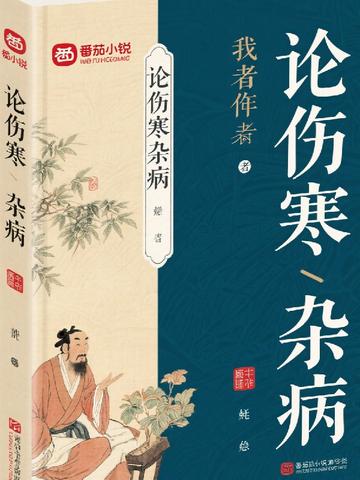
"Treatise on Febrile and Miscellaneous Diseases" is a medical classic written by Zhang Zhongjing, a famous medical scientist in the Eastern Han Dynasty of China. It is known as the "ancestor of prescription books" and has a profound influence on the development of Chinese medicine. The following is its detailed introduction:
book background
In the late Eastern Han Dynasty, wars were frequent, epidemics were prevalent, and people lived in hardship. Although medical theory and practice had some development, there was a lack of systematic summary. Because many people in his family died of typhoid fever, Zhang Zhongjing determined to study medicine, learned from others' strengths, and combined his own clinical experience to write this book.
Main content
- Treatise on Febrile Diseases: 10 volumes in total. It mainly discusses exogenous febrile diseases. Based on syndrome differentiation of the six meridians, it summarizes and categorizes various symptoms at different stages in the occurrence and development of exogenous diseases, and proposes corresponding treatment principles and methods. It contains 113 prescriptions.
- Synopsis of the Golden Chamber: a total of 6 volumes. It mainly discusses miscellaneous internal diseases, as well as surgical, gynecological diseases and other diseases. It takes syndrome differentiation of viscera as the core and elaborates on the etiology, pathogenesis, symptoms, diagnosis and treatment of various diseases. It contains 262 prescriptions.
Academic value
- Create a syndrome differentiation and treatment system: Provide a set of scientific syndrome differentiation and treatment methods for TCM clinical practice, making TCM's understanding and treatment of diseases more systematic and standardized.
- Enriching the content of prescriptions: The prescriptions in the book are rigorous in compatibility, accurate in application, and have remarkable curative effects. They are praised as "classic prescriptions" by later generations, laying a solid foundation for the development of prescriptions.
- Promote the development of medical theory: It played an important role in promoting the development and improvement of traditional Chinese medicine theory. Its six-meridian syndrome differentiation and viscera syndrome differentiation theories became the clinical syndrome differentiation of later generations of traditional Chinese medicine.