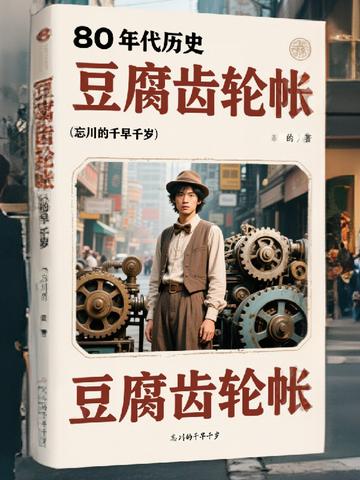
In a northern commune in the 1980s, tofu beauty Chen Fengxia held up a ledger soaked in soybean juice and chased Wang Fugui, a car repairman who owed three yuan of tofu. The jagged teeth of the chain intertwined with the sound of chopping chili peppers, accidentally pulling out the gear codes of his father's generation - the scar on Wang Fugui's palm was the "key to revolution" when his father broke his finger while building the railway, and the soybeans on the red string around Chen Fengxia's wrist were the "intelligence seeds" hidden by her mother at the bottom of the millstone. In those days, three pieces of tofu could be used to change a gear, which fed the codes of the guerrillas.
The yellowed ledger in the Yingzui Mountain Cave revealed the secrets of 1943: Blind Zhao used pigeon droppings to write Morse code, Li Tiedan's father's wrench once broke the Japanese railroad tracks, and there was a five-pointed star hidden under the cherry blossom pattern on Director Zhang's steering wheel. When the stone gate is opened in the "gear lifting" posture, the gear transportation diagram, the tofu basket code, and the chain rhythm code merge the passion of the fathers into the fireworks of the market.
This is not a heroic epic, but a folk memory hidden in the tofu trap, pepper water and the sound of the chain. Wang Fugui's 28-bar and Chen Fengxia's slingshot allow the spark of revolution to continue in the daily life of debt collection - history is never far away. It is hidden in the missing corners of mother's red rope and father's wrench. In the "clucking" days of ordinary people, it creates a warmth that lasts longer than debts.