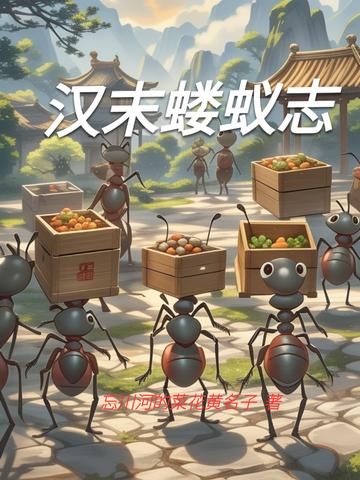
In the final years of the Eastern Han dynasty, the smoke of the Yellow Turban Rebellion had yet to clear. Across the land of Yan Province, a silent resistance was taking root in the soil, wielding counting rods as blades and jujube pits as spears. Wang Erdan, once an agricultural officer in the Yellow Turban army, carried a broken counting rod marked with the Red Leopard pattern, left behind by General Bo Cai, along with fragments of The Nine Chapters on the Mathematical Art. With Liu Ruyan’s counting-rod battle formations and her methods of military farming to aid him, he transformed defeated, scattered soldiers into “farmers who read and study.” They carved “The Red Leopard Returns to the Fields” into stone tablets, hid counting-rod emblems among jujube pits, and used the farming techniques of Fan Shengzhi’s Book as armor. They turned counting rods, which the court condemned as “sorcery,” into seeds of fire for dividing farmland, resisting enemies, and passing on their legacy.
When Huangfu Song’s government troops crushed the Red Leopard banner beneath their crossbow bolts, Wang Erdan buried Bo Cai’s Red Leopard scales in the fields of twelve districts. Thorny jujube branches wove a “counting-rod formation” along the old road to Yangzhai, while bloodstained jujube pits became “protective charms” in the hands of refugees, more tangible than talisman water. Liu Ruyan used counting rods to devise military strategies, hiding ambush plans in The Nine Chapters on the Mathematical Art. A veteran named A Niu linked the scattered soldiers with Red Leopard-patterned knots, and half a leopard’s paw carved on a boundary stone joined with counting rods to form a new emblem. To the court, they were “remnants of the rebels,” but in truth, they were carving out another epic of survival amid the chaos. Blades may break and banners may fall, but the numbers carved into the land and the jujube sprouts buried in the spring mud would eventually weave a net beneath the government troops’ hooves, tougher than any blade or spear. It was the wisdom of farmers, the legacy of the defeated, and a silent rebellion that would let the “Red Leopard spirit” be reborn among the grain.
This is no song of heroes, but the record of a group struggling to survive in the cracks of history. When counting rods were no longer bamboo sticks for tallying figures on a desk, and military farming became a strategy for resisting violence