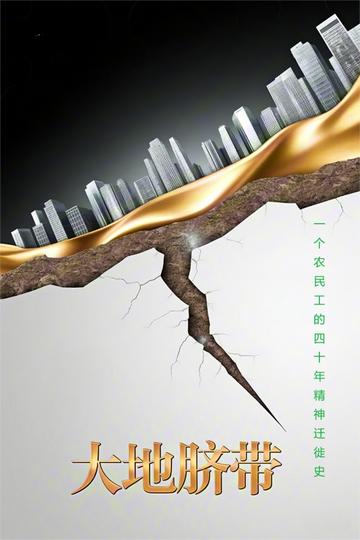
The birth of the umbilical cord of the earth comes from gazing at thousands of reincarnations of life and death in the folds of loess. When the steel forest engulfs the farming civilization at dusk, I want to use magical glaze to bake those pottery pieces of fate that have been crushed by the times. Chen Mancang's umbilical cord is not only a blood vessel connecting the land, but also a yardstick for measuring the rift between urban and rural areas - every migrant worker is a walking fault zone of civilization, with diesel and wheat syrup flowing through his body at the same time.
On the bones of realism, I implanted a prophecy system and mathematical metaphors: the depth of placental burial corresponds to the slope of debt growth, and the trembling frequency of the transport symbol hints at the cyclical law of capital flow. Those seemingly absurd and surreal details (beating millet, geometric patterns of spider webs) are actually the revealed truth of existence that has been obscured.
When creating, I am reminded of the rock paintings of miners and the poetry manuscripts on Dongguan's assembly lines. These wild arts that grow in the cracks of the system are the most vivid footnotes of China's urbanization process. I hope that readers can not only see the history of blood and tears of individuals, but also feel the body temperature when the land and machinery bite each other...
The prophecies seeping out of the cracks in the walls, the topology on the pay stubs, and the destiny map collaged from X-rays are all trying to construct a new narrative grammar—deconstructing nostalgia in engineering terms, and using mathematical formulas to transcend the dead. When Mancang finally seals the city's memory into the pickle jar, I hope we can hear the symbiotic rhythm of clay and chips.