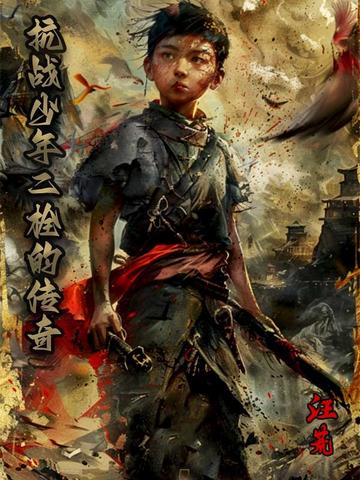
In late autumn of 1931, Ershuan, a young shepherd from Changbai Mountain, lost his family in a Japanese massacre that wiped out his village. With only his hunting dog Heizi left, he fled with it into the snowy wilderness. To survive, he ate raw wolf heart and fought off his pursuers. The bloody eyes of the boy took on the ferocity of a wolf cub. A bloodstained codebook changed the course of his fate: risking his life to cross the blockade, he delivered a map of the Kwantung Army's chemical weapons unit deployment to an Anti-Japanese United Army political commissar, plunging from then on into a torrent of bloodshed.
From the frozen Songhua River to the burning city of Nanjing, Ershuan and a white-eared hunting dog descended from Heizi tore open the dark side of history through fourteen years of war. In the bloody Battle of Jiangqiao, he hid among dead horses to deliver intelligence. During the retreat through the Savage Mountain, he used a Japanese helmet to catch rainwater and keep his comrades alive. In Harbin's Pingfang district, he stole records of the human experiments conducted by Unit 731, only to recognize the faded red cord on his little sister's skull in a mass grave.
This is no heroic epic, but the confession of a soul remade by war. When Ershuan drives a poisoned bayonet into his enemy's heart, he also kills the last trace of his own humanity. When he shields a group of orphans from shrapnel, his shattered mechanical eye reflects the boy he once was, smothering a crying infant. The nine bronze rings on his shepherd's crook mark the transformation from avenger of the snowy wilderness to special-class combat hero. And at the Tokyo Tribunal, a jar of formalin containing a liver finally makes the world hear the wails of the Eastern Inferno.