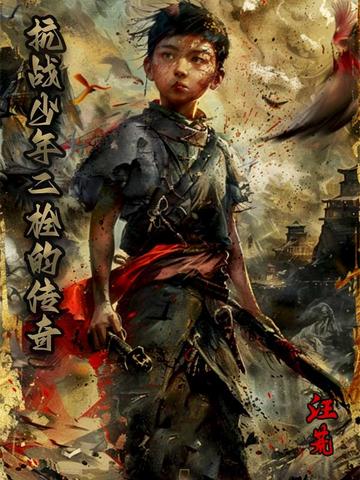
In the late autumn of 1931, Er Shuan, a young shepherd in the Changbai Mountains, lost his relatives in a massacre of his village by the Japanese army. His only remaining hound, Heizi, escaped into the snowy fields with him. In order to survive, he feeds on the heart of a wolf and fights his pursuers. The blood-stained pupils of the young man embody the ferocity of a "wolf cub". A blood-stained code book revealed a twist of fate - he risked his life to cross the blockade and handed the Kwantung Army's poison gas unit deployment plan to the Anti-Japanese Political Commissar, and then stepped into the torrent of blood.
From the frozen Songhua River to the burning city of Nanjing, Er Shuan and the white-eared hound who inherited Heizi's bloodline tore through the dark side of history during the fourteen-year war: during the bloody battle at Jiangqiao, he mingled with the pile of horse corpses to deliver information; during the retreat at Savage Mountain, he used a Japanese steel helmet to catch rainwater to extend the lives of his comrades; in the Bungalow District of Harbin, he stole the in vivo experimental records of Unit 731, but recognized the faded red rope on the skull of his little sister in a mass grave.
This is not a heroic epic, but a confession of a soul reshaped by war. When Er Shuan stabbed the poisoned bayonet into the heart of the enemy, he was also killing the last trace of humanity with his own hands; when he shielded himself from shrapnel to save the orphans, his shattered mechanical eyes reflected the image of himself who had covered a crying baby to death. The nine copper hoops on the shepherd's whip are engraved with the fission trajectory from a snowfield avenger to a super battle hero, and the bottle of formalin-soaked liver specimen in the Tokyo Tribunal finally let the world hear the wail of the Eastern Hell.