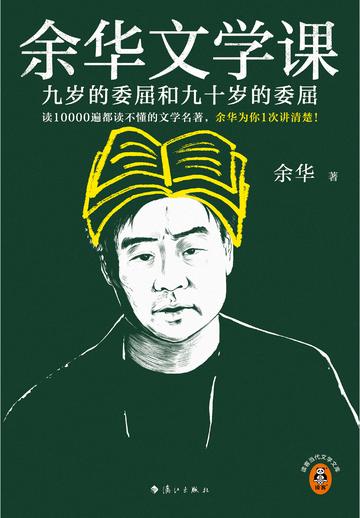
Yu Hua's Literature Class: the Grievances of the Nine-Year-Old and the Grievances of the Ninety-Year-Old
余华文学课:九岁的委屈和九十岁的委屈
- Status
- Completed
- Length
- 99k Words
- Updated
- 1y ago
- Source
- Fanqie
Stats
242Reads
9.4Score
117Shelves
18Chapters
37Listens
37.5kReads · all time
Tags
Synopsis
Reader comments
In booklists 3
Yu Hua's Book Recommendations
7.1MViews209Books2moUpdated
Literature Books, I Want Literature Books! ! !
Family members, I want to read literature books, books that can improve my writing skills or increase my knowledge. Beg on your knees!
3.2MViews764Books2dUpdated
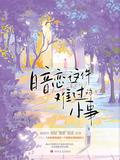
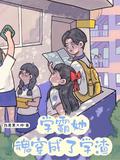
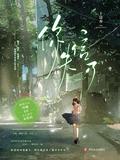
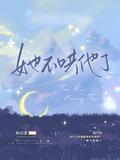
What Should I Do If There Is a Shortage of Books?
I want to read a book similar to "Xiaoxiao Yu Shengchi". "Xiaoxiao Yu Sheng Chi" is a youth campus two-way secret love novel written by Meng Zhiwan. Ye Xiao and Ruan Yusheng met in elementary school. When Ye Xiao heard the rumors that Ruan Yu had a girlfriend, she felt sour and deliberately dated the boy who pursued her.
3kViews75Books1yUpdated
I have read "Alive" three times, and I burst into tears every time. "Brothers" is so disappointing. Yu Hua's novels always surprise me. I will search for the foreign novels he recommended. Some of them have been read, some have not been read, and some are not known at all. I deeply agree with the ranking of novel writers he said.
1. The two-way effect of literary creation and real life. 2. Narratives of various possibilities that are developed under the premise that the motivation remains unchanged are more valuable. 3. The long-lasting topic is the fundamental nature of human beings, including social, political, historical, etc. Aspects of human nature. 4. Transformation plot, or plot change, the transitional actions between changes are very important, not only expressing the process of change, but also expressing the reasonableness of the change. 5. The transformation narrated through literary imagination always leaves a difference between the transformed and the original. This difference is the space left by imagination for insight. 6. Metaphors can be continued. Continuation breathes new soul into a well-worn trope. 7. Life and death, before and after the change, a "red scarf" is needed to completely divide the two states. 8. Lenovo. Use something familiar to describe another thing that is related to it. 9. Insight. For example, the lines and actions must be in line with the character's psychology, personality, experience, and current situation. 10. Sometimes the narrative needs to be like this. It only provides direction and does not state the specifics. If it does, it is often limited. 11. You have to weigh what is laid out in the front and what comes out later. This is the skill of narrative. 12. No matter how the vocabulary changes or the sentence structure changes, the emotion remains the same. Then let the calm be the end of the previous climax. 13. "Six Times of Crying", the narrative forms a downward curve, which is a progressive approach to emotional processing. 14. Use environmental description to express the psychology into a three-dimensional form, rather than writing it as a flat surface. 15. Irony, such as the inversion of character behavior/situation and status. 16. Sense transformation. For example, use the feeling of hotness to write about pulling out an ice cube. 17. Intersperse other emotions between two progressive emotions to make the sense of similarity disappear. 18. If you want to write down a person's life concisely, don't talk in generalities, don't hit here and there with a hammer and a stick, find a suitable angle to start from, and find another suitable angle to end. 19. It can be understood but cannot be expressed in words (it does not necessarily mean that it cannot be conveyed, as it is not conveyed in this book). Read the quoted books.
The author's analysis of each work is very interesting, and each paragraph is explained in detail, and the author of the work is vividly connected with the work. When reading, you feel like you are communicating face-to-face with each author.
Many internationally renowned writers were mentioned, which also helped us understand the writer Yu Hua better.
One reading can also activate more readings and awaken various experiences in past readings. At this time, reading will give birth to another world and another life path.
Literature requires one's own exploration and one's own awareness
Very characteristic of Teacher Yu Hua's narrative
Like Yu Hua, waiting for the next work
It once again refreshed my understanding of Teacher Yu Hua. The ocean of literature is endless.
Interesting. The contrasting descriptions in the writing make it feel sometimes humorous and sometimes memorable, as if touching the soul and shocking the heart.
Does Teacher Yu Hua's book not require copyright?
I like it very much and benefited a lot!
They are all private words, and private words are sometimes deep and sometimes shallow.
Teacher Yu Hua's book is very helpful and inspiring for writing and reading literary works. The words of experience are very useful. If you read them several times, they will be of greater help.
It's quite interesting and I learned a lot from Teacher Yu Hua! The literary works he analyzed should be read when you have time! I also want to read Teacher Yu Hua's works.
My favorite author, among other things, he reads an amazing amount and has an extraordinary memory.
The master reads from a high perspective and has a broad view. Many of his insights surpass those of ordinary readers, and he also provides many inspirations.
The content is clear and will be of great help to middle and high school students.