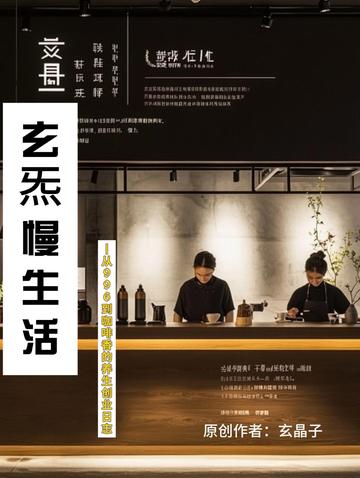
After ten years of ups and downs in the Internet workplace where code and caffeine are intertwined, Wang Xuandao had an epiphany one midnight while working overtime - the error message on the screen was surprisingly similar to a passage in "Yunji Seven Lottery". Carrying a mortgage for thirty years, he resolutely mortgaged his wedding house to buy an old shop in Wuyue Cultural and Creative Park, vowing to inject the philosophy of Taoist medicine into modern coffee culture.
From the cubicle on the 27th floor of Tengyun Building to the curved shop under the century-old ginkgo tree, Wang Xuandao, under the guidance of Tai Chi elder Gu Mingyuan, deciphered the coffee code in the tea book of the Ming Dynasty: using morning dew to adjust the consistency of latte, changing the tilt angle of hand brewing kettle according to the solar terms, turning Chinese medicine grounds into fertilizer for coffee pots... When "Five Elements Pastry" was reviewed by the Food and Drug Administration, and when "Ziwu Liuzhu Business Table" was rejected by the Meituan system, he had to use the medicine scale left by his father to balance ideals and reality.
At the same time, his wife Su Jinghao discovered that the buyer of the wedding house in the county was actually a competitor of the cultural and creative park. Intern Lin Suxin tested the anti-fatigue data of astragalus coffee in the laboratory, and the old firefighting drawings provided by Li Mo accidentally saved the mortise and tenon bar in danger. In this cafe named "Xuan", the sound of steam from the coffee machine resonates with the sound of boiling water from the purple clay pot, which outlines a warm picture of modern urbanites looking for a place where their body and mind belong.