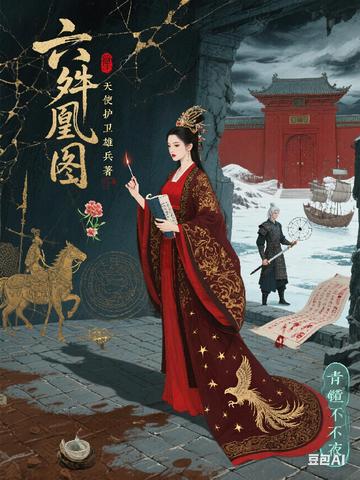
Su Qingwu, an orphaned herb farmer from Longxi, lost her village to a flash flood as a child and eventually became a maid in a prince's residence. Using the pulse-diagnosis technique from the family heirloom Yellow Emperor's Inner Canon, she saved a princess from a dangerous childbirth, only to be poisoned and rendered unable to bear children. During ten years in the Cold Palace, she used beeswax rubbings to expose a counterfeit coin operation, applied the Essential Techniques for the Welfare of the People to tame partridges and end a locust plague, and used ancient Han flood-control methods to build dikes and protect the people. At last, she returned to court with the mentally impaired prince Xiao Yan. Amid the women of the six palaces vying for power, she used tea ceremony to distinguish poisoned wine and examined bones with steam to redress an unjust death, exposing a plot to switch newborns and murder an heir. When war flared in the northern deserts, she forged iron rhinos to tame the Yellow River, dug qanat wells to open routes to the Western Regions, and turned the Chilechuan grasslands into an imperial horse pasture. After taking power as regent, she introduced the alternate-field system to reclaim wasteland, printed Confucian classics with movable type, melted the jade seals of seven kingdoms to cast the Phoenix Dignity, carried poetry aboard canal boats, and spun snow-white cotton, extending the Silk Road as far as Fulin. Yet beneath her phoenix crown, she refused to follow Wu Zetian's example and erect a monument. Instead, she followed Yu the Great's example, sinking a cauldron engraved with admonitions, then abdicated in favor of her adopted son and retired to her medicinal fields. From a penniless girl in a cold hut to ruler of Europe and Asia, she shed not a drop of poisoned blood and built not a single tomb of injustice. With benevolent medicine as her sword and the people's trust as her armor, she became the first female emperor in the annals of history.