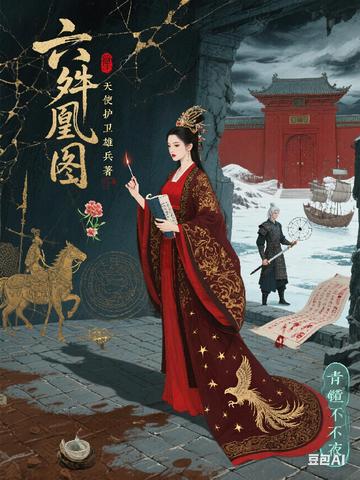
Su Qingwu, an orphaned medicine farmer in Longxi, suffered a flash flood that wiped out her village when she was young, and became a maid in the palace. She relied on her family's "Huangdi Neijing" technique of diagnosing the pulse with hanging silk threads to save the difficult-to-delivery princess from a critical situation, but she was poisoned and her heir was ruined. During her ten years in the cold palace, she used beeswax rubbings to uncover the secret coinage of copper coins, borrowed the "Essential Art of Elevating the People" to tame partridges and control locust plagues, and introduced the Han Dynasty's jade craftsmanship to build embankments to calm the people, and finally returned to the court with the foolish prince Xiao Yan. When the Sixth Palace was in conflict, she used the tea ceremony to divide poisonous wine, steam bones to test the grievances, and break the infanticide situation; when the war broke out in Mobei, she cast iron rhinoceros to control the Yellow River, dug karez wells to connect to the Western Regions, and took the Chile River as the horse herding prison. After listening to the government behind the curtain, he promulgated land laws to reclaim unused fields, published books with movable type to spread Confucian scriptures, melted the jade seals of the seven countries to cast phoenix statues, carried poems on canals, spun snow from cotton bolls, and opened the Silk Road to Fulong. However, under the phoenix crown, she refused to follow the example of Wu Fu and erect a monument, but instead followed the instructions of Yu the Great and Shen Ding, adopted a Zen position and adopted a son, and retired to the medicinal fields. From an orphan girl in a cold kiln to the leader of Eurasia, she never stained a drop of poisonous blood or built a tomb of injustice. She only used benevolence as a sword and the people's hearts as armor, and eventually became the first female empress in Qing history.