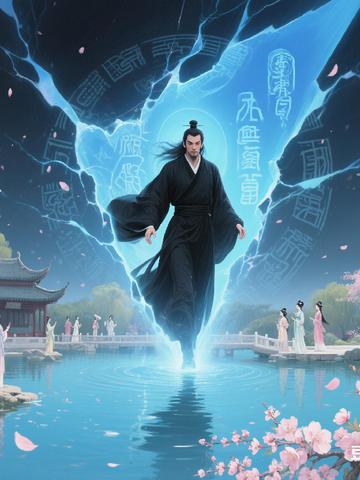
1. Late Eastern Han: Zhang Jiao was devoted to saving the world and its people. He shut himself away in a remote mountain to cultivate, seeking a path beyond mortal existence. One day, he happened upon an ancient cultivation manual in a cave, emanating a mysterious aura. Runes shimmered across its pages, their meaning obscure and difficult to decipher. Driven by his obsession with cultivation and his determination to study, Zhang Jiao spent months pondering it day and night, finally grasping a unique cultivation method: the Primordial Chaos Art. This method centers on harmonizing yin and yang and following the ways of heaven and earth, emphasizing the perception and use of nature's power. It not only greatly improved Zhang Jiao's own cultivation, but also gave him a solid and distinctive theoretical and practical foundation for his future cultivation journey after transmigrating to the world of Dream of the Red Chamber.
2. The world of Dream of the Red Chamber: On the surface, the Jia family enjoys lavish banquets and extraordinary wealth. In truth, however, feudal ethics are an invisible shackle, tightly binding everyone. Jia Baoyu and Lin Daiyu are deeply in love, yet the harsh constraints of feudal ethics make their path to love full of hardship. They cannot openly express their feelings and can only hint at them through poetry and glances. For instance, at poetry gatherings, Lin Daiyu uses delicate verse to express her feelings for Jia Baoyu, and he understands her unspoken meaning, yet cannot openly declare his love. This suppressed affection stands in sharp contrast to the equality and freedom sought by the Way of Great Peace. It lays bare how the corrupt order of the world of Dream of the Red Chamber oppresses human nature, foreshadowing the conflicts to come.