[Rising from Poverty | Rural Revitalization | Anti-Corruption and Political Intrigue | Idealism]
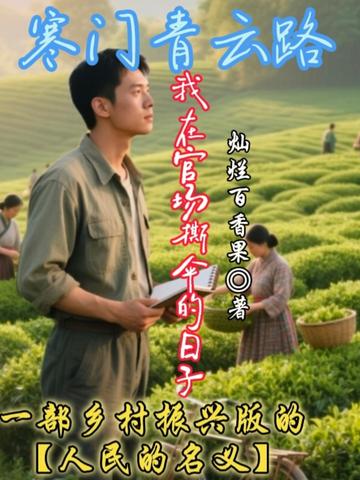
Born into poverty, Lu Mingchuan grew up with painful memories of hardship in the mountain villages of Qingshi County. His father died young, his mother made a living picking tea, and student loans and bricklaying at construction sites barely covered his tuition. He scored first in the county to get into Tsinghua University, but in its ivory tower he witnessed the brutal reality of hollowed-out villages. He wrote a thesis titled “The Governance Challenges of Hollowed-Out Villages” and vowed to “use knowledge to transform the countryside.”
After graduation, he turned down a high-paying job and resolutely returned home to become a township civil servant. As soon as he started working at the grassroots level, he encountered a dark network in which village bullies were siphoning off poverty-alleviation funds. When he refused to join them, he was suppressed. With the covert support of Ye Wenlan, head of the provincial discipline inspection commission’s inspection team, he gathered evidence alone, brought corrupt official Zhou Zhengyang down, and was promoted to deputy town mayor ahead of schedule. Over the next ten years, he seized the opportunity of digital reform to lead the creation of a “blockchain poverty-alleviation fund oversight system” and promote cultural tourism in ancient villages. But after angering provincial interest groups, he found himself threatened by criminal forces. His mother’s tea fields were burned, his girlfriend Lin Xue was intimidated, and he was even framed for taking bribes.
At the brink of life and death, he joined forces with the media to expose the secrets of money-for-power deals, riding a wave of public outrage to unleash an anti-corruption storm and ultimately uprooting the mastermind. From county magistrate of Qingshi County to a key member of the Provincial Committee’s Reform Office, Lu Mingchuan broke through the constraints of the system with his “Young Cadres in Village Service Program.” Through hard work, he proved that the path upward for children from poor families can also be the path to rebirth for rural China.
A rural revitalization version of In the Name of the People: an idealistic young man from a poor family wields his ideals like a blade, carving a path to the light amid the power struggles of the system.
(A story of political intrigue, personal growth, and devotion to the country)