In the fourteenth year of the Zhengtong reign, a bolt of lightning split open a rift between two souls in the Forbidden City.
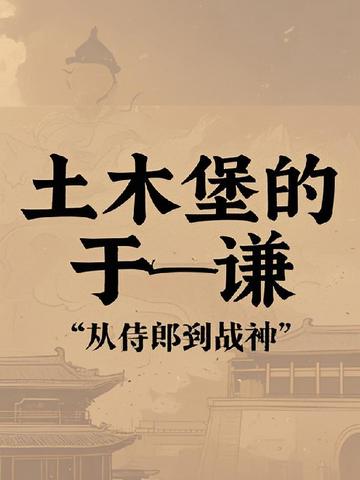
Lin Yuan, a modern military engineering expert, awoke in the aftermath of an explosion to find himself transformed into Yu Qian, Vice Minister of War in the Ming dynasty. The Tumubao Crisis was only seven days away. Oirat cavalry had already breached Dushikou, while Wang Zhen of the Directorate of Ceremonial was goading the Yingzong Emperor into leading a personal campaign.
Armed with knowledge from five centuries in the future, he improved matchlock guns with rifled barrels and cast pre-fragmented shells, then incinerated the Oirat heavy cavalry at Yanghekou with “ghostfire mines.” But behind the victory dispatches, the damp gunpowder concealed a secret palace recipe made with pagoda tree buds. A fragment of the Yongle Encyclopedia seized from the battlefield bore the seal of the Directorate of Ceremonial. Even the gifted artisan Chen Sanyan, whom he had rescued, had a silver astronomical charm from the Directorate of Astronomy embedded between his teeth.
When the first two-stage rocket tore through the night sky above Juyong Pass, the sound of porcelain shattering rang out from the inner palace.
Amid the triumphant music celebrating the new emperor’s accession, Yu Qian uncovered an even more brutal truth in a blood-written letter from the imperial prison: locked away in Wang Zhen’s study was a drawing of the hydraulic forging hammer lost with Zheng He’s fleet, while a matchlock with a rifled barrel had appeared on the grasslands north of the desert. This arms race spanning Eurasia had been laid out like an inescapable net ever since the treasure ships burned during their voyage west twenty years earlier.
He had to fight more than Mongol cavalry. He also had to confront the hand clutching the Complete Treatise on Agricultural and Industrial Technology atop the dragon throne.
As improved Folangji cannons thundered from the walls of the capital, the shattered bronze fragments from a cannon barrel reflected both the faint dawn of civilization and the last, monstrous shadow of a thousand-year-old imperial system.