Physics consultant Chuang Liangjian
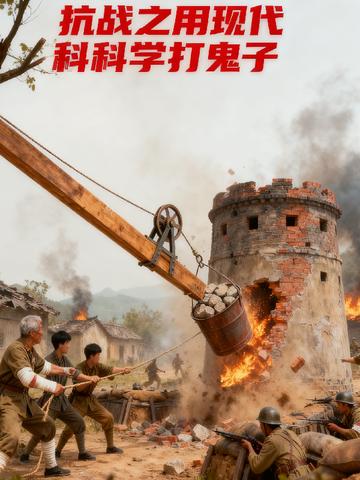
Zhao Rui, a physics graduate, accidentally traveled to the battlefield of "Bright Sword" and became a special staff officer of Li Yunlong's independent regiment. He turned his knowledge of mechanics, optics, electromagnetism and other knowledge into weapons to defeat the enemy: he used the principle of leverage to build barrier-breaking bridges, used concentrated pressure explosives to bomb bunkers, and used electromagnetic induction to interfere with Japanese military communications. He was also able to obtain intelligence across timelines and crack new weapons and raid plans.
Outside the battlefield, he used the principles of thermodynamics to build furnaces and salt factories, and used his knowledge of mechanics to build barracks, so that the soldiers could have hot meals and live safely during the war. Around the campfire, sharing local accents, hometown delicacies, and chatting about snippets of modern life have built up a deep comradeship.
With physics as his blade and blood as his soul, with the trust of Li Yunlong and the support of the soldiers, Zhao Rui repeatedly defeated powerful enemies in the Taihang Mountains. He not only wrote a battle legend of the weak defeating the strong, but also witnessed the feelings of family and country in the revolutionary years, and became the hard-core think tank for the independent regiment to survive in desperate situations.
Reader comments
Not bad, logical thinking is clear!
Taking "modern science to fight the Japanese" as the core, it breaks away from the traditional anti-Japanese war routine. The protagonist uses his knowledge of mechanics to improve mine fuzes, uses optical principles to lay out mazes, and uses hard-core physical logic to exploit the Japanese army's equipment advantage. The rich historical background and solid scientific thinking make "Wits" more exciting than "Charge". It is a rare hard-core anti-war masterpiece.
Not bad, logical thinking is clear! Taking "modern science to fight the Japanese" as the core, it breaks away from the traditional anti-Japanese war routine. The protagonist uses his knowledge of mechanics to improve mine fuzes, uses optical principles to lay out mazes, and uses hard-core physical logic to exploit the Japanese army's equipment advantage. The rich historical background and solid scientific thinking make "Wits" more exciting than "Charge". It is a rare hard-core anti-war masterpiece.