Updated at 15:00. Love you all.
The Tang dynasty (618–907 CE) had 21 emperors and lasted 289 years.
“Great Tang” was more than a dynastic name. It represented vast territory, immense national strength, and flourishing culture, making it one of the mightiest empires in the world at the time. At its height, during the reigns of Emperor Gaozong and Emperor Xuanzong, the Tang territories stretched east to the Korean Peninsula, west to the Aral Sea in Central Asia, north to the Mongolian Plateau, and south to Vietnam, covering roughly 12 million square kilometers.
The Tang dynasty wielded enormous international influence. Chang'an, modern-day Xi'an, was the world's largest international metropolis, with a population of over a million. Merchants, envoys, and students came from Persia, Arabia, Japan, Silla, and other lands. Japanese missions made repeated visits to study in China, while Silla and Goguryeo on the Korean Peninsula were deeply influenced by Tang culture.
Politically, the Tang perfected the Three Departments and Six Ministries system and the imperial examination system, both of which influenced later generations in China and other East Asian countries such as Japan and Korea.
Its legal code, the Tang Code with Commentaries, became a model for legal systems across East Asia.
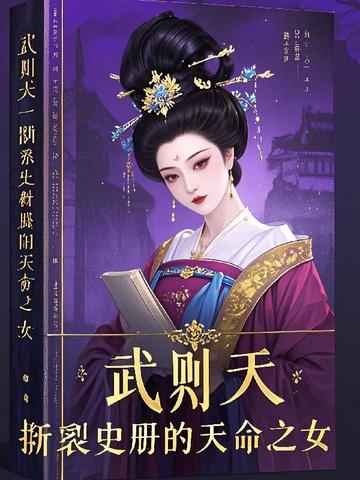
Wu Zetian entered the palace at the age of fourteen in 637. In 660, she began ruling from behind the curtain. In 690, she founded the Zhou dynasty and became emperor. She abdicated after the Shenlong Coup in 705, and died that same year. Her final decree ordered her burial alongside Li Zhi at Qianling Mausoleum. Throughout her life, she broke through the constraints of male rule and held power for half a century. She relied on ruthless officials, eliminated Zhangsun Wuji, and promoted Di Renjie. She improved the imperial examinations and pioneered anonymous exams, palace examinations, and military examinations. Their legacy can still be seen today in sealed exam papers, provincial and national civil service exams, and physical fitness tests.
History is a subject once reserved for the aristocracy, and it can be far too obscure. I hope that through the novel format, I can give historical figures feelings and flesh and blood, so readers can have a really satisfying time learning about history.

Well written and historically accurate