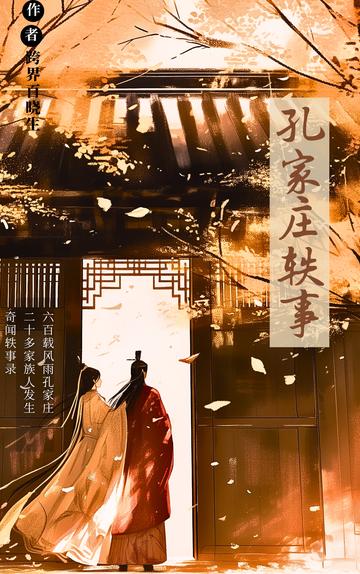
At the confluence of the Sui and Huai Rivers in eastern China stands Kongjia Village, an ancient settlement founded by a branch of the Confucius family. More than six hundred years ago, the third younger brother of Confucius's sixty-fifth-generation descendant led his relatives to clear the land and establish the village. They laid it out in the shape of the Eight Trigrams to protect the secret pact of the River. From then on, the cultural legacy flowed like a river, unbroken through the ages. Amid the wars of the Ming and Qing dynasties and the fires of battle during the Republic of China, the clan used learning to suppress evil and built dikes with blood and sweat. The academy's locust tree nurtured the village's literary fortune, while a blood-written genealogy revealed the clan's benevolence and courage. Generation after generation of guardians made a pact with the River God to keep the village safe and peaceful. Kong Wenming, the seventy-fourth-generation heir, had listened to his ancestors' strange tales since childhood. But as grave robbers cast their shadow over the modern age, he uncovered a shocking secret: a bronze casket was awakening, and evil things in an ancient tomb were stirring back to life. Holding half a jade talisman, he used his blood to renew the pact of the River. Guided by the sound of lessons in the academy, the spiritual markings on the ancient locust tree, and the shades of his ancestors, he fought greedy forces and uncovered the mystery of the tomb of culture. Woven together by cultural heritage and river waters, this village now writes a new legend with a thousand years of unyielding benevolence and courage.