[Revolution + ensemble cast + no female lead + Fourth Calamity + online game + System + hardcore + infrastructure-building + farming + technology + firearms + alternate setting]
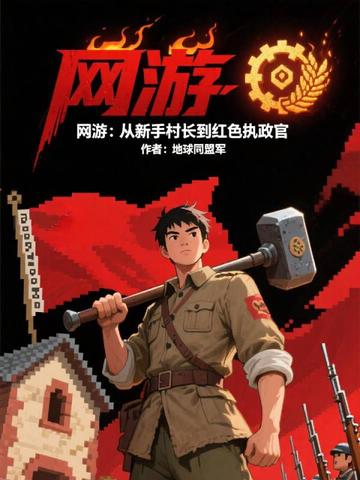
Lin Yuan, a top student in political science, has an accident. When he wakes up, he discovers that he has become the village chief of Taoyuan Village, a beginner village in the virtual martial arts game World Online: a penniless, powerless NPC with not a single soldier under his command.
In this game world, where the rich run rampant and government troops are little better than bandits, Lin Yuan soon realizes that he seems to possess some kind of special authority. When he leads the villagers in resisting oppression and reclaiming their occupied farmland, a mysterious “Revolutionary Development System” is accidentally activated!
From then on, Taoyuan Village undergoes a dramatic transformation:
• Lin Yuan becomes an “ideological mentor,” explaining in plain language to the NPC villagers and curious players “who creates wealth” and “why resistance is justified.” The game forums erupt with discussion: “Is the beginner village NPC teaching philosophy?”
• Hammers ring in the smithy as they experiment with crude steelmaking, aiming to forge “new-style equipment” capable of standing up to powerful enemies!
• The player guild “Red Dawn” comes after hearing of them and moves its headquarters to Taoyuan, turning the beginner village into an instant player hotspot.
• The villagers of neighboring Lijiawa, unable to endure their oppression, secretly ask for help. Lin Yuan acts decisively, liberates the neighboring village, and forms a mutual-defense alliance.
• They launch a night raid on a bandit stronghold, then turn its easily defended, hard-to-attack terrain into a fortified bastion named “Red Flag Fort”!
• Players become “resistance guerrillas,” NPC officers are won over and spread new ideas, and the drunken scholar develops “bamboo helicopters” to carry leaflets far and wide...
The truth is always within the range of artillery!












The data is too abstract. There are twenty people in a village, four or five young and middle-aged laborers, seven or eight old and weak women and children, one landlord, five or six servants, and one blacksmith can be found among the old and weak women and children. Generally speaking, in ancient society, a village had a population of dozens to a thousand, and only large villages or markets had a blacksmith shop. With a population of at least 100, there would be landlords, and the proportion of servants was far less than 25%, and the labor force was also the majority. None of this data is correct, it is too abstract.