In other people’s Three Kingdoms, Zhuge Liang sees through the secrets of heaven, Zhou Yu is dashing and brilliant, and Guan Yu’s fame shakes all of China.
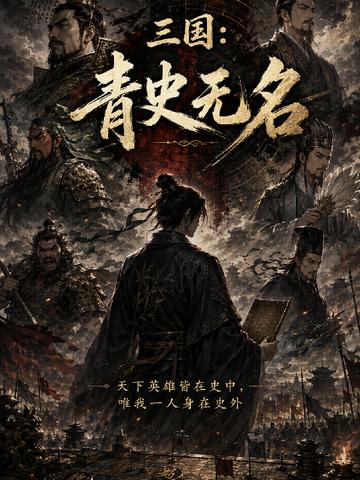
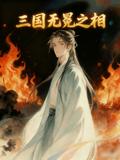
In this Three Kingdoms, a hidden figure never recorded in the histories stands behind the scenes: Shen Du.
He does not fight for supremacy, seek a title, or enter the imperial court. Instead, he builds a network for transporting grain across provinces, evacuating refugees, and gathering intelligence across opposing camps.
At Red Cliffs, he does not summon the east wind, but lays out an entire escape route by water. At Huarong, he does not persuade Guan Yu to let Cao Cao go, but quietly pulls away half the pursuing troops.
On the campaign into Shu, he offers no brilliant stratagem. Instead, he exposes the blind spots in the map of Xichuan where refugees have been overlooked. Amid the flames of Yiling and the dying lamp at Wuzhang Plains, he records the lives of nameless commoners at every deadly turning point, in places the heroes never see.
He can change the outcome of a battle, yet refuses to take credit for it all his life. He can see through everyone’s fate, yet cannot stop Zhou Yu’s early death, Pang Tong’s fall at Fenghuang, Guan Yu’s death at Maicheng, or Kongming’s final exhaustion.
Heroes write the histories. He shelters all the ordinary people the histories erase.
When Sima Yi searches every old box in the Wei palace, when Zhuge Liang clashes with him over their ideals, and when Liu Bei breaks with him on his deathbed,
the greatest game in the world is finally laid bare:
The people who truly shape an age of chaos are not emperors and generals, but those whose names are not even worthy of a place in the biographies.
The perspective of the work is novel and quite beautiful 😄