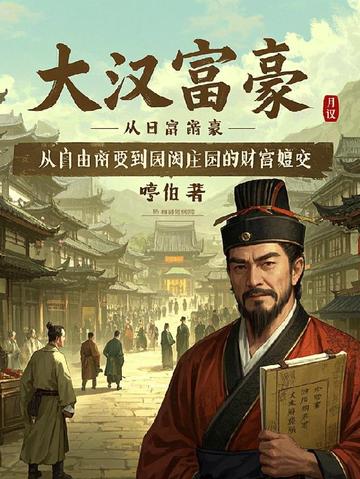
Zhong Changtong prophesied the end of the world in "Changyan Liluan Chapter": "The wealthy man's house has hundreds of buildings, the fields are full of fields, there are thousands of slaves, and thousands of followers." These few words accurately outline the final scene of the abnormal development of wealth in the four hundred years of the Han Dynasty.
From Linqiong iron merchants competing freely in the market, to Luoyang eunuchs wielding power and amassing wealth; from the wanton expansion of clan estates, to military groups realizing power, the Han Dynasty carefully constructed and continuously improved the unified currency rights, salt and iron official camp, calculation and tax system, and all were equal, but they could not stop this trajectory of wealth evolution. In the end, the Han Dynasty had no choice but to fall into the "either-or" binary form of moving from officialdom to complete private ownership by powerful elites. The wealthy Han Dynasty also gradually completed the military conglomeration of their wealth and transformed into the heroes of the Three Kingdoms.
In the early Han Dynasty, merchants developed independently based on their own abilities; in the Eastern Han Dynasty, scholars and merchants merged; at the end of the Han Dynasty, warriors and merchants merged into one. This series of changes formed the evolutionary path of the power of the rich in the Han Dynasty.
A country lacking rich people is sad because it lacks the source of innovation and development vitality; however, a country full of powerful people is equally sad because it is often a prelude to destruction.
This novel is unique, using martial arts style as its writing style, focusing on one dynasty, leading readers to appreciate the legendary road to wealth of the Han tycoons, and to experience the vicissitudes of the Han Empire. At the same time, we can deeply experience the characteristics of the wealth changes of the Han rich in the fields of industry, trade and finance. In the ups and downs of the story, savor the close connection, mutual influence and dialectical unity between the fate of the rich and the fate of the empire.