"Zi Zhi Tong Jian": The never-ending theater of human nature
When modern people copy the Xuanwu Sect's tactics in conference rooms and reenact the drama of the struggle between Chu and Han for hegemony in financing road shows, "Zi Zhi Tong Jian" has already written the answer. Sima Guang used history as a knife to cut through the fabric of human nature in 1362: An Lushan's flattering climb was exactly the same as the "upward management" speculators in today's workplace; Fu Jian's superstitious arrogance of millions of troops before the Battle of Feishui was just like the decision-makers trapped in the "information cocoon" in the era of big data. The sharpest thing about this book is that it exposes the same script of all period dramas - the triangular iron law of power, desire and fear.
The records of more than thirty reform failures in the book constitute a white paper on ancient social experiments. The backlash of vested interests encountered by Shang Yang's reform shares the same gene with the organizational pains experienced by technology companies during their transformation; Emperor Wu of the Han Dynasty's orders to disrupt the machinations of princes are still resurrected in contemporary equity designs. When the crisis public relations of the Weishui Alliance of Emperor Taizong of the Tang Dynasty became an MBA lesson plan, and when the factional fighting between Niu and Li became a textbook on capital games, this thousand-year history book completed its transformation from a pile of old papers to a realistic sandbox.
History never teaches people how to succeed, but it always shows how to avoid making the same mistakes again. Turning over this magic mirror that reflects the past and present, you will be surprised to realize: beneath all the high-sounding doctrines, what is always beating is the naked pulse of humanity—and this is the survival algorithm that "Zi Zhi Tong Jian" dedicates to every modern person.
Reader comments
"Game of Thrones: The Black History in Zizhi Tongjian" published in the summer solstice takes a new approach and interprets "Zi Zhi Tongjian" from a unique perspective, which is refreshing. It breaks through the traditional historical narrative model and connects classic events such as the division of the three families into the Jin Dynasty and the Battle of Changping with modern scenes, making the obscure history vivid and easy to understand. During the narration process, the author portrays the characters in detail, such as Zhiyao's willfulness and King Zhao Wuling's talents and strategies, all of them are lifelike, allowing readers to deeply feel the complexity and multifacetedness of historical figures. Digging deeply into the power, desire and fear behind historical events is the essence of this book. It reveals that history is not a simple list of events, but the result of the competition between various forces. The Battle of Changping was not just Zhao Kuo's "paper talk", but also underlying factors such as Zhao's strategic decision-making errors and diplomatic isolation. Reading this book feels like being in the whirlpool of ancient power struggles. It can not only enrich historical knowledge, but also provide reference for the present. Whether it is dealing with people or facing competition, one can learn wisdom from it.
Nice. This is the first time I read Zizhi Tongjian, and it turns out that it is so rich in content.
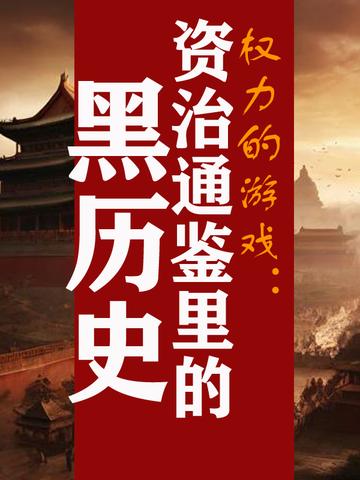
"Game of Thrones: The Black History in Zizhi Tongjian" published in the summer solstice takes a new approach and interprets "Zi Zhi Tongjian" from a unique perspective, which is refreshing. It breaks through the traditional historical narrative model and connects classic events such as the division of the three families into the Jin Dynasty and the Battle of Changping with modern scenes, making the obscure history vivid and easy to understand. During the narration process, the author portrays the characters in detail, such as Zhiyao's willfulness and King Zhao Wuling's talents and strategies, all of them are lifelike, allowing readers to deeply feel the complexity and multifacetedness of historical figures. Digging deeply into the power, desire and fear behind historical events is the essence of this book. It reveals that history is not a simple list of events, but the result of the competition between various forces. The Battle of Changping was not just Zhao Kuo's "paper talk", but also underlying factors such as Zhao's strategic decision-making errors and diplomatic isolation. Reading this book feels like being in the whirlpool of ancient power struggles. It can not only enrich historical knowledge, but also provide reference for the present. Whether it is dealing with people or facing competition, one can learn wisdom from it.
Nice. This is the first time I read Zizhi Tongjian, and it turns out that it is so rich in content.