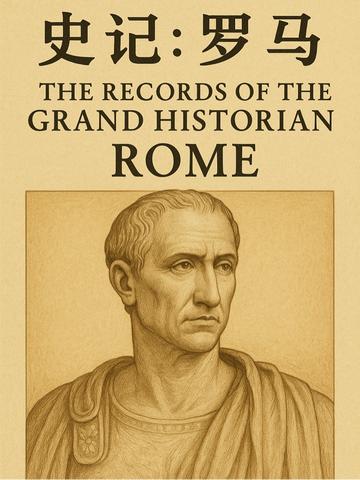
"The Chronicles of Rome" is written in the style of Sima Qian's "Historical Records", chronicling the rise and fall of the twelve emperors of the Roman Empire and describing the events of the Western Territory over the past thousand years. Beginning with Caesar, it goes through Augustus, Tiberius, Nero, and Domitian and ends well. All the twelve kings are either wise and wise or cruel and tyrannical. The virtues and failures of the masters, the rise and fall of the empire are all contained in it.
The author uses writing as history, plucks Suetonius, Tacitus, Dio and other books, and uses the archaeological words of today's people to compile this chronicle, which is based on major events and reveals human relations. A series of biographies are added to make up for the unfinished work of this chronicle, describing the righteousness of Brutus and the downfall of Cleopatra. There are also chapters on military system, laws, and chronology to clarify the system and make it clear and testable.
Looking at his books, we can see that Rome evolved from a republic to an empire, and from prosperity to collapse. A gentleman's reading of it is enough to reflect the past and present, and to understand people and politics; a scholar's reading of it can also examine classics and literature, and understand the Chinese and the Western.
This book is not just a pretentious talk, but a real ambition to write history. I admire the legacy of "Historical Records" and turn it into a new chapter of "The Biography of the Twelve Emperors".
A good life should be rewarded