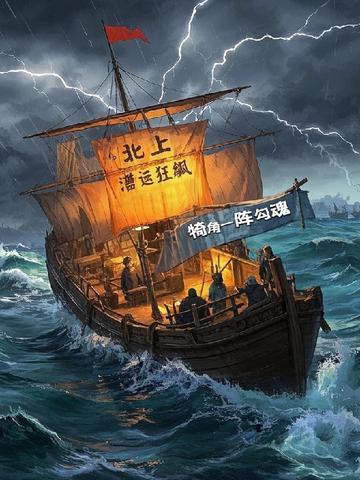
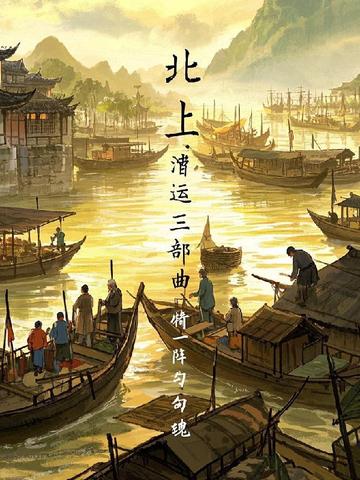
In the turbulent years from the late Qing Dynasty to the early Republic of China, the ancient industry of water transportation faced unprecedented challenges. The story begins in 1880, the late period of the Westernization Movement, with the rise of steamship merchants and the opening of the Beijing-Hankow Railway. Traditional water transport was in danger.
Zhou Bingyuan, the leader of the Cao Gang, adheres to tradition and resists the emerging shipping forces; Shen Hongling, the female helmsman of the Qing Gang, explores the path of transformation in the tide of the times. Lin Moqing, an overseas engineer, and Joseph Wilson, a British water conservancy expert, brought about the canal dredging project, but it triggered a wave of anti-foreigners among the people.
As the water transport system was officially abolished in 1920, the fortunes of the water transport workers fluctuated and the water transport culture gradually disappeared. This book uses this period of history as a metaphor for the difficulty of the transformation of traditional Chinese society into modern times. It also incorporates the topic of intangible cultural heritage protection to show the relationship between all living beings under the changing times. The work "Going North: Water Transport Rush" is an "independent derivative work"