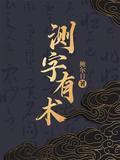
"The Way of Heaven's Secrets and Earth's Veins" is an important part of the "Heavenly Chronicles" series by Ni Haixia, the gifted physician known as Master Ni. Together with "The Way of Heaven's Secrets" and "The Way of the Human World", it forms the complete "Heavenly Chronicles". "The Way of Heaven's Secrets and Earth's Veins" focuses on the relationship between the natural and human environments, using the principles of the I Ching and the Eight Trigrams to explain feng shui and geography in depth.
In its discussion of feng shui, it explains the contours of mountains and rivers and the nature of the terrain, including how features such as the Azure Dragon on the left and White Tiger on the right, the bright hall, hidden and distant hills, and a mountain behind a site affect the flow of qi. This helps readers assess locations for ancestral graves, among other things. On the subject of geography, it focuses on interior layouts, showing how to arrange a living space according to direction and spatial relationships in order to create a favorable atmosphere for life and personal growth. It argues that geographical factors in one's living environment matter more than feng shui. Ni Haixia explains these ideas in accessible language and includes practical examples, making obscure knowledge easy to understand. He guides readers in exploring the potential influence of natural patterns on their fortunes, health, and other aspects of life, helping them use this knowledge to seek good fortune, avoid misfortune, improve their lives, and plan for the future.
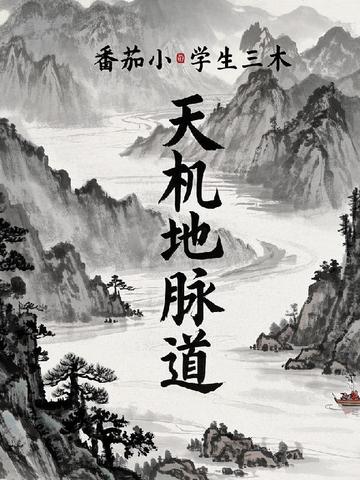

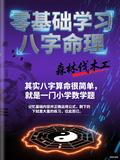
I am very happy to write the first review for this book! As an important part of Ni Haixia's "Tian Ji" series, Tomato primary school student Miki's "Tianji Dimai Dao" takes the I Ching Bagua as the cornerstone and opens the door to Feng Shui and geographical knowledge. The author explains the influence of Feng Shui and geography on life from a unique perspective, from the trend of mountains and rivers to the indoor layout, explaining it in simple terms. Although the feng shui theory in the book has certain traditional basis, its scientific nature is controversial and needs to be viewed dialectically. Content related to geographical layout, such as guidance on arranging rooms according to orientation, has certain practical value and can help readers create a more comfortable living environment. The book's explanation of Feng Shui and geography knowledge is interspersed with a large number of examples, making obscure theories easy to understand and providing learning opportunities for readers who are interested in traditional culture. However, parts of it rely too heavily on traditional narratives. Overall, "Tianji Dimai Dao" is a book full of mystery and cultural connotations. It is suitable for readers who are interested in exploring Feng Shui geography and traditional culture. It helps us draw inspiration from the wisdom of the ancients and re-examine the connection between the living environment and life.
It's okay, the explanation is clear and thorough.
Was this written by Master Ni? Are you sure it wasn't mixed with anyone's personal information?