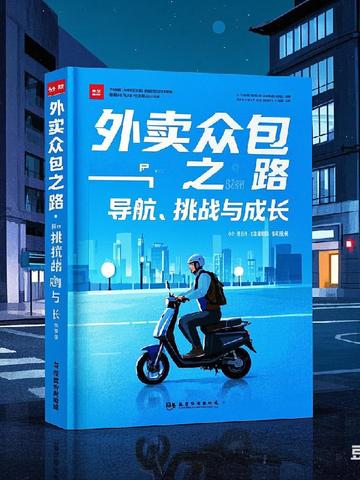
[Main story line]
The novel is told from the perspective of the delivery rider "Night Rider", who lives and delivers food under the neon lights of the city. From the embarrassment of being confused by navigation when he first entered the industry, to becoming a "living map" who knows the shortcuts of streets and alleys, the protagonist continues to grow up in the face of overtime deductions, sudden weather changes, and the dilemma of getting lost. He uses electric wheels to measure the city temperature and writes the epic of ordinary people's struggles while delivering meals.
Core Highlights
Industry slicing: A direct look at the real living conditions of food delivery riders, showing industry details such as merchants' game of food delivery, game of route planning, game of rules and regulations, etc., Such as the concrete survival pressure of "deduction of 3.4 Yuan = two orders in vain".
City mirror: Using takeout boxes as windows, it presents urban cross-sections such as bars and nightclubs, old communities, and emerging business districts. It reflects the diverse texture of urban life through special tasks such as "late-night document delivery" and "heavy rain emergency orders."
Growth fable: The navigation system is a metaphor for life guidance. In the collision of "shortcuts and detours" and "plans and accidents", it explores how humans maintain independent judgment in the technological age and find professional dignity in mechanical repetition.
Emotional resonance: Use details such as "customers' heart-warming messages" and "insisting on delivering food in heavy rain" to show the goodwill between strangers and give the cold delivery data a human touch.
[Narrative style]
Using the technique of "fast-paced line drawing + philosophical monologue", the roar of electric vehicles is interspersed with thoughts on the essence of life, which not only retains the roughness of the takeaway rider, but also contains poetic observations of urban civilization.