As Yue forces' artillery fire bathed Chen Feng's bloodstained uniform in red, the young officer suddenly heard the distant rumble of war drums and bells.
The body of the white-haired general crumpled and reassembled in a rift in time and space. When he opened his eyes, he found himself in a thatched farmhouse enclosed by a bamboo fence.
The characters "Chen Feng," etched into the bronze sword hilt, burned against his palm, revealing the name erased from the casualty list thirty years ago.
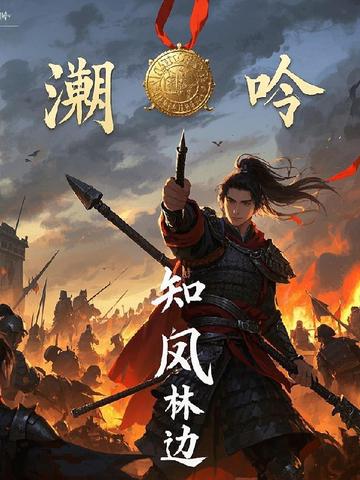
An armored warrior bearing memories of modern warfare awakens in an age of chaos, only to face a clash of power and schemes in the Qin court.
The arrival of the Mohists from the jianghu opens his eyes to new possibilities. He uses papermaking to create a new medium for spreading written knowledge throughout the land, and metallurgy to forge sharper blades. With modern materialist ideas, he unites the Hundred Schools of Thought. Bronze spears and halberds gleam with a cold light: war in this age is destined to be reshaped by the iron will of two thousand years in the future.
But when smoke from the battlefield veils the stars, he must make a choice: let gunpowder burn away the civilization built around chariots, or use the shield of benevolence and righteousness to break the fated cycle of conquest?
Amid the smoke and fire of Xianyang, the white-haired general grips a flintlock engraved with Qin script. Behind him stand Mohist warriors clad in bulletproof vests.
He knows the wheels of history have begun to turn, and he is the sharpest wedge driving them forward.
Historical novels require rigor, and I look forward to the author's more exciting writing in the future.
Historical novels without cheats are good historical novels.