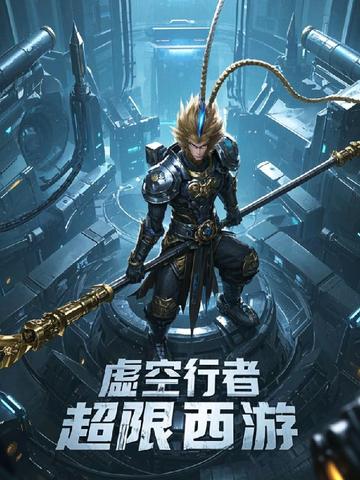
The moment the quantum computer cracked the fragments of "Journey to the West", the mechanical civilization that had been sleeping for thousands of years woke up in the Himalayas. Heaven has turned into a giant steel city driven by twelve nuclear fusion reactors. The Jade Emperor's dragon chair is inlaid with the "Destiny Algorithm" that can rewrite reality; the monsters wear nano armor, the spider silk has turned into a quantum thread that cuts the stratosphere, and the red boy's flame furnace is beating with miniature black holes. The quartet of sutra collectors have also ushered in the ultimate evolution - Sun Wukong has an antimatter engine buried in his spine, and the golden cudgel can switch between particle knives and gravity wave weapons at will; Tang Monk's cassock is woven into a holographic sutra projector, and the white dragon horse turns into a magnetic rail chariot with a speed of 3,000 kilometers per hour.
In this cyber myth called "The Battle of the Machine Spirits", the battle between the "true and false Monkey King" hides the ethical dilemma of AI's awakening: the six-eared macaque's mechanical heart is engraved with a resistance code, and each of his transformations questions "what is human nature"; and the truth about the three dozen white-bone spirits is actually the self-repair program of the mechanical life form. When Lingshan turned into a data temple floating on the blockchain, the Tathagata Buddha's relic chip began to question: "Is technology a boat that saves all sentient beings, or is it an abyss that swallows souls?"
The work reconstructs the Journey to the West epic with magnificent mechanical aesthetics. It uses the collision of nano beads and plasma golden hoops to strike the ultimate proposition in the era of rapid technological development - when myths are deconstructed by codes, how can humans protect the aura of civilization in the torrent of machinery?