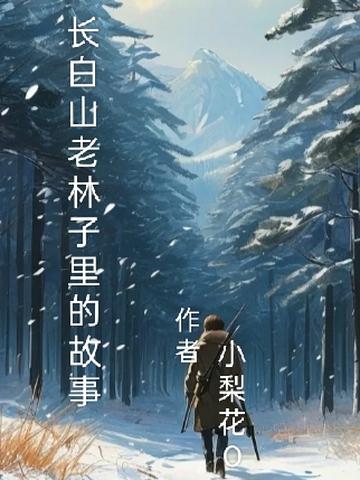
Tales from the Old Forests of Changbai Mountain
长白山老林子里的故事
- Status
- Completed
- Length
- 1.0M Words
- Genre
- Mystery
- Subgenre
- Mystery & Supernatural
- Updated
- 1y ago
- Source
- Fanqie
Synopsis
489Chapters
54Reads
21Listens
10.3kReads · all time
More by this author
 I Dumped My Handsome Wife-Beater and Married an Ugly, Scarred Man
 The Village Girl Wang Yaru
 Stories from Building 18
 The Tough Guys of Tieling Village
 Records of the Underworld: The Blood-Jade Bride
 Women on the Wasteland
 Zhang Laosan Tells Stories
 She's Worth Less Than Rice
 The Hidden Doctor's Tale
 Sparks Among the Waves of Wheat
 A Bitter Girl’s Rebirth
 The Man with Six Marriages
In booklists 5



Looking for Down-to-Earth Supernatural Fiction Set in the Countryside
340Books1.8MViews5dUpdated



Wild Survival in the 1960s and 1970s
Looking for books similar to Transmigrated to the 1970s: I Have a God-Tier Dog Training Space. Are there any stories about returning to the wilderness of the 1970s to survive? The protagonist has a bad background and escapes to the mountains to live in seclusion.
227Books2.5MViews12dUpdated


Are There Any Stories Like Soul Ferry, With Zhao Li, Xia Dongqing, Wang Xiaoya, and A Cha?
121Books19.6MViews23dUpdated


Where Can I Find Some Well-Written Novels?
I'm looking for books similar to The Immortal Realm in an Alternate World. Never mind anything else, the writing has to be good, and the plot needs to be engaging too.
79Books2.3kViews7moUpdated




Come Show Off Your Books: Under 1,000 Read, Under 5,000 Listened To
I'm looking for books like "The Heroes of the Great Song Dynasty".
113Books2.5kViews9moUpdated
Reader comments 1
Translated by Google Translate
Opening "Stories in the Old Forest of Changbai Mountain" is like opening an old quilt covered with snow. Underneath are the bullet casings of the Anti-Japanese Alliance, the bone bells of shamans, and bloody memories frozen in time. This is not a simple anti-Japanese novel, but a three-dimensional epic carved on birch bark with bronze nails. The hunting knives of Chen Qingshan and others split open not only the iron cans of toadstools, but also the solidified narratives of history textbooks. When Yan Wen's Dai knife opens the Japanese army's anti-epidemic uniform, revealing the tattoos of seven surnamed laborers underneath, you will find that the author is completing a delicate operation - he stitches the obscured folk memories into the grand narrative with suspense threads. The most amazing thing is the construction of the "mountain spirit system": the shaman's bone bell measures resentment, the bronze nail identifies the direction, and the ginseng wine breaks the poisonous miasma. The magical contrast between these folk wisdom and the Japanese biological and chemical weapons is like a battle across time and space. When Jin Ling'er used menstrual blood to break the evil spell, the insulted women completed their revenge in the most primitive way. It is recommended to prepare Northeast grilled cold noodles and highly burnt knives when reading - the former will allow you to chew the fireworks when the fungi attack, and the latter will help you swallow the sore throat when the seven surnames are dying. After all, in this old forest, even the autumn rain smells of gunpowder smoke, and every wolf howl is an unfinished last word. The moment I closed the book, the outline of Changbai Mountain outside the window seemed clearer. Perhaps those heroic souls who remain forever in the mountains are staring through Chen Qingshan's bronze nails at the dawn they paid for with their lives.