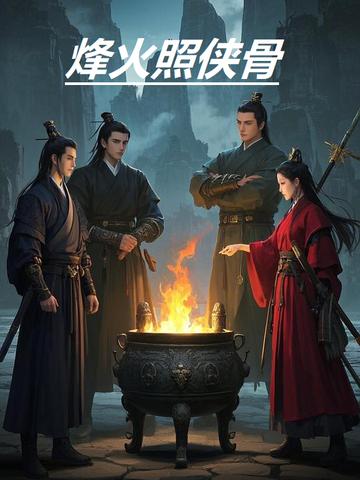
In the fourteenth year of Tianbao, war drums at Yuyang shattered the song and dance. An Lushan allied with heretical cults from the Western Regions and used the "Candle Dragon's Inverse Scale" to alter the dragon veins. The realm teetered on the brink of collapse. Du Heng, a young man from Luoyang carrying a blood feud over corruption in the grain transport administration, comprehended the Sword Canon of the Great Void, a lost scroll left by the poet Li Bai, during the bloody battle at Suiyang. From then on, he wielded poetry as a sword and carried the Dao upon its blade. The martial world was swept by turmoil: demonic monks from the Western Regions refined corpses into puppets, Bon priests of Tibet summoned ghosts to devour hearts, and the Jiaowei zither of the Pear Garden stole souls with its music... Du Heng crossed the broken blades of Tong Pass, the snowy sands of Kucha, and the Bone River of Shule, uncovering the mystery of the Nine Tripods: the vessels Yu the Great used to suppress the dragons required the blood sacrifice of seven people of the purest hearts to awaken them.
The soul of Li Bai became a sword of poetry, Pei Min's celestial compass crystallized into blood, a Persian saint burned herself to kindle a flame, and a blind boy gave his life to complete the divination. When the light of the bronze tripod illuminated Chang'an's ruined walls, Du Heng broke his sword and used it as a brush, writing the final move in the void: "Ode to All Living Beings." Flesh and blood returned to dust; the cultural legacy burned anew. The smoke of war finally dispersed, leaving only an unnamed lamp atop the city wall, shining on the cooking smoke of human homes and the joys and sorrows of the people.
Poetry and sword share one origin; the Nine Tripods quell the soul. A hero's spirit leaves no trace; the warmth of home becomes the monument.