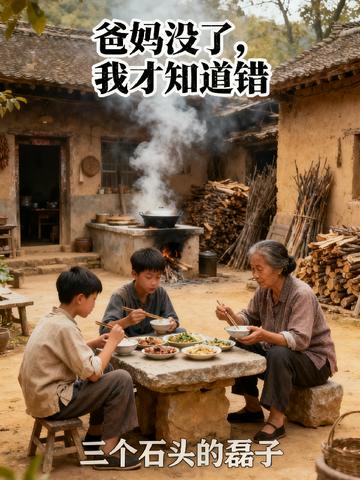
When he was fifteen, Xiao Lei’s world collapsed with the news that his father had suddenly died at a construction site far from home. As the eldest son, he was forced to shed his childhood overnight and shoulder the burden of a family teetering on the brink, despite his still-fragile frame. His thirteen-year-old brother, Xiao Sen, turned his immense grief into sharp-edged rebellion, fighting and running away to resist the unfairness of fate. Their mother returned from the city and spent ten years caring for them through hardship, trying to mend the cracks in their family.
But growing up was full of thorns. Caught between poverty and pride, the brothers hurled their most hurtful words at the mother they loved most. When they finally understood the silent sacrifices and tears she had given them, fate bared its fangs once more: their mother, worn down by years of toil, passed away. The regret of “wanting to care for one’s parents only after they are gone” became a wound in their hearts that would never heal.
With their last source of support gone, the brothers became the only lifeline in each other’s lives. One took root in the countryside like a mountain, guarding memories and shouldering responsibility; the other headed for the city like the sea, battling the raging currents. Their relationship froze for a time because of their differing ideals, but when each came close to despair, they realized that the other had long been an irreplaceable part of their life. At last, when a long-delayed text message in their father’s belongings came to light, the helplessness of an entire era and the misunderstandings of youth were quietly dissolved by the bond of family. They finally understood that their parents’ love had never left them, and that they themselves had become each other’s strongest support through every storm. They would turn the love they had fought so hard to preserve into a source of warmth for others.