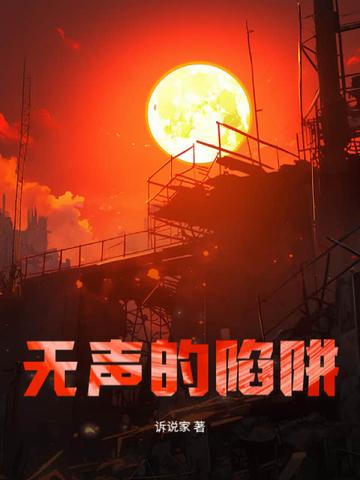
The story begins when intern reporter Lin Xia investigates a series of disappearances in Qinglan Town, only to uncover a shocking conspiracy spanning three centuries. This seemingly ordinary town is actually a living incubator for “Laboratory Seven,” and its residents are genetic vessels for an immortality project.
When Lin Xia finds a cloned specimen bearing her own birthmark in an abandoned clinic, witnesses police officer Chen Mo transformed into a half-human, half-beast killing machine, and discovers that the temporal anchor she detonated has spawned countless parallel versions of herself, she finally realizes she isn’t the investigator at all. She is the experiment’s original “mother.” From the first-generation cloning pod of 1977 to the consciousness matrix of 2123, every choice strengthens a death loop like an ouroboros: the blood on the clinic operating table comes from a gunshot wound inflicted on her by her future self, the postmark on an anonymous tip is dated after it was received, and the “murderer” convicted in court is none other than herself, twenty years later.
In this war against herself across time and space, Lin Xia must join forces with echoes from different timelines: a reporter who exposed the black-market trade in 1998, a scientist who destroyed the data in 2015, and a fugitive bearing the blame in 2035. Every choice splits off a new Möbius loop. When the consciousness of Lu Wenyuan, an immortality-obsessed madman, takes over the Huanyu Biotech empire, and Qinglan Town becomes a blood-soaked altar that devours memories, the only key to ending the loop turns out to be the ∞-shaped crystal continually collapsing in Lin Xia’s right eye. It is the mark of her as the original test subject, and the seam where all the rifts in time and space meet.