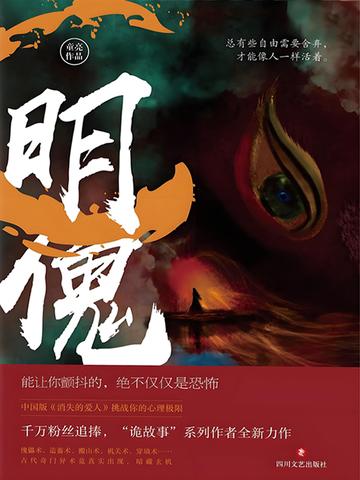
A painted-skin monster wears human skin; a Minggui is a human wearing monster hide.
The most mysterious legacy of the Mohists isn’t the ingenious craft that would make Lu Ban admit defeat. It’s the art of turning people into beasts, a practice that makes even Mohist disciples shudder. According to the Mohists’ secret teachings, this art is reserved for those who have gravely violated the principle of universal love, destroyed peace, and proved unworthy of being human. Their human skin is stripped away and replaced with a monkey’s pelt. From then on, they can no longer speak or act like people, and are reduced to upright beasts. During the Western Han dynasty, the Mohists were persecuted by the authorities for abusing this art and promoting the idea that all people are equal. They were nearly wiped out, surviving only by going underground and passing their teachings through the common folk.
At the end of the Yuan dynasty, the identity of the Mohist Grand Master was exposed. He was subjected to the art of turning people into beasts and reduced to a tool for making money. He called himself a Minggui. As he sought a way to save himself, he encountered another Mohist successor who had been hiding among the people... The art of turning people into beasts, puppetcraft, mountain-moving techniques, wall-piercing arts: all manner of ancient esoteric skills emerge one after another, thrilling and full of hidden mysteries.
Some people spend their whole lives pursuing an identity, only to discover in the end that they have lost who they were. Perhaps only by giving up certain fantasies of freedom can one live as a human being.


The story has ups and downs and is written from the perspective of the old lady. In fact, we know nothing about things like her, so we can empathize with it. Her analysis and response also showed her intelligence. In fact, they are all human hearts and are driven by interests. Very nice!
Brain-burning, read it in one day!
Very nice. But I am uneducated and don't know how to express myself
I stayed up late to read it, it was very philosophical.