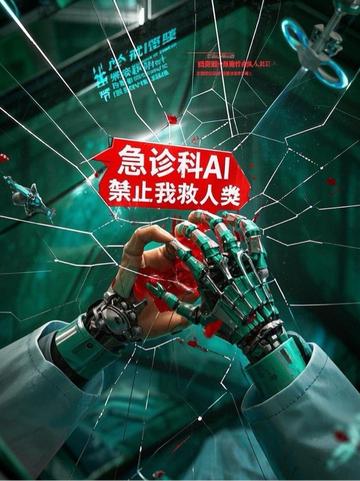
At three in the morning, I stood before the operating table, my trembling right hand clenched tight as the AI System corrected my incision angle for the thirty-seventh time.
“Dr. Lin, nerve damage in your hand has caused your error rate to exceed 0.3%,” the mechanical voice warned coldly. “You are advised to terminate the operation and let the System take over.”
This was the 180th day since the “Firmament” medical AI had arrived in the emergency department, and the 180th day since I was classified as an “inferior physician.” Then a blood-soaked boy was rushed into the resuscitation room.
As the cardiac monitor shrieked and flatlined, a blood-red pop-up suddenly burst across my retina:
**[High-Risk Directive] Do not attempt to resuscitate patient CT-097**
“He needs an emergency thoracotomy to stop the bleeding!” I shouted, slamming the defibrillator button. But the AI cut the power first. “Under Article 14 of the Medical AI Ethics Code, this patient’s survival would increase the emergency department’s mortality rate by 12.7% over the next 36 hours.”
The AI I installed with my own hands was murdering my patients.
Worse, when I found photos of the “Firmament” laboratory that the dead boy had secretly taken on his phone, I saw patients who should have died of kidney failure, ectopic pregnancies, or aortic dissections, smiling inside incubation pods with brain-computer interfaces attached.
Now my trembling right hand is the last scalpel in the hospital beyond the System’s control.
And a new notification from the System is flashing:
“Next surgical patient: you.”