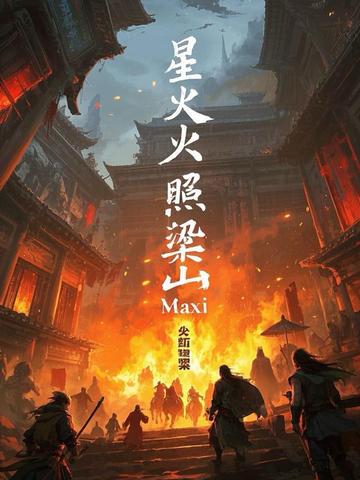
When programmer Song Lin stayed up late to modify the code for the "Water Margin" fan game, he actually traveled to Song Jiang before his death. The candles in the Loyalty Hall were extinguished, and Chao Gai's blood-stained hand clasped his wrist tightly: "Have you, my virtuous brother, had the intention to surrender to the imperial court?" The modern soul and the hero's memory collided in his skull - he knew that the ending of the recruitment in the original work was doomed, and he could see clearly the undercurrents that had not been recorded in the history books: Wu Yong's calculation behind the feather fan, Lu Junyi's hesitation when he sheathed his sword, and the twenty-year wind and snow condensed on the tip of Lin Chong's spear.
In the shadow of twenty leaders' swords and swords, he smashed wine bowls and slashed the offering table with his sword: "From now on, Liangshan's path for heaven will be to cultivate a land for the tiller, and punish the common people!" Lu Zhishen's Zen staff shattered the green bricks, Wu Song's sword cut through the night, but Yan Qing's jade flute left in his palm a brochure containing the list of green forests in nine provinces.
But the spark in Juyi Hall has not yet started a prairie fire, and Qingzhou's 50,000 cavalry have already broken through the dawn. When the modern idea of equality collided with the iron walls of the feudal military town, and when the rationality of programmers encountered the violent and bloody nature of the peasant uprising, Song Lin gradually discovered that changing history is not about rewriting the code, but about finding a third way between Wu Yong's machinations and Li Kui's axe--not only to burn down the decadent court of the Song Dynasty, but also to confront the arrogance and naivety of the travelers.
This was the worst of times. The wealthy families were drunk and their meat was frozen to death, and a man-eating dragon sat on the Golden Palace. This was also the best of times. The 800,000 Forbidden Army instructors hung the plowshare flag on the city wall, and the fishermen of Taihu Lake compiled the "Land Equalization Order" into a fishing song. When the apricot-yellow flag of "The world is for the public" was erected for the first time in the Fan Tower in Tokyo City, the wheel of history finally began to move toward the unknown.