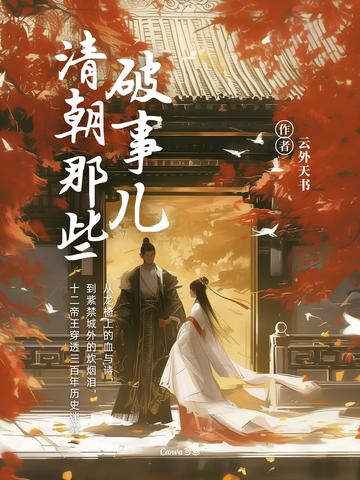
In the eleventh year of Tianming, when Nurhachi coughed up blood by the Hun River before his death, he would not have thought that the seeds he planted would grow into towering trees; in the seventeenth year of Chongzhen, when Wu Sangui was wandering in front of Shanhaiguan, he had no idea that he was knocking on the door of a new era. This long historical scroll, based on "Manuscripts of Qing History" and supplemented by secret records, will take you into the stage of the Qing Dynasty in 268 - here are the dancing silhouettes of Huang Taiji reading "Three Kingdoms" at night, the memorial memorials falling from the dragon boat on the southern tour of Emperor Kangxi, the footsteps of Emperor Yongzheng pacing all night in Yangxin Hall, and the Western clocks caressed by Empress Dowager Cixi in Chuxiu Palace. We no longer look up at the symbols on the dragon chair, but gaze at those living faces: the frost on Dorgon's riding whip, the tears on Nalan Rongruo's lyrics, the cold sweat under Nian Gengyao's armor, the fragrance of ink in Cao Xueqin's remaining manuscripts. When you open this picture scroll intertwined with blood, fire and silk, you will find that the salt merchant's silver cellar was hidden under the glazed tiles of the prosperous period of Kangxi and Qianlong, and the missionary's cross swayed in the shadow of the sundial of the Qianqing Palace. This is an epic that belongs to the conquerors and defenders, and it is also a legend written by tens of thousands of small people with cooking smoke - in the most gorgeous dusk of this Eastern Empire, every soul makes its own ripples in the long river of history.