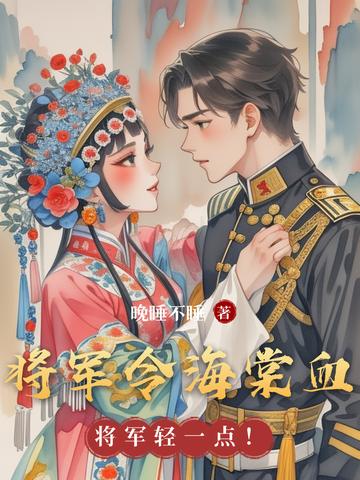
Shen Fengsheng, the orphan of a famous actress, disguised herself as a man and inherited her father's business. Under the protection of her mentor Tang Siye, she became the gold medal screenwriter of Cantonese opera "Yu Xiaosheng". However, she was expelled from the apprenticeship after her identity was exposed.
Triple shackles: Faced with the marriage contract requirement of her childhood sweetheart Lu Yunsheng, the strong oppression of the warlord Marshal Huo Zhenting, and the ethical constraints of her mentor Tang Si Ye, Feng Sheng struggled to survive in the emotional whirlpool.
Breaking out of the cocoon and becoming a butterfly: From "Love in the Heart" to "Mulan Ci", Feng Sheng used the pen as a sword to create a new style of Cantonese opera, completed the awakening of women on the night of the shocking change in the Huo Mansion, and wrote the legend of the opera garden with blood and tears.
Reader comments
Introduction: The cognitive revolution that breaks common sense
Yuval Harari's "A Brief History of Humankind" is not a historical work in the traditional sense, but a "history of human cognitive evolution" full of philosophical speculation. From an interdisciplinary perspective, the author combines biology, sociology, and economics to raise a core question: How did Homo sapiens transform from an ordinary species in the corner of Africa to a "god" dominating the earth? ** The answer contains not only historical truth, but also a warning for the present and the future.
"General Ling Haitang's Blood" is a novel that combines martial arts and historical elements and is known for its grand background and delicate emotional descriptions. The story revolves around the protagonist's growth and struggle in troubled times, showing the intertwining of heroic pride and the love of children. The author skillfully integrates historical events into the plot, making the whole story more full and real. The writing is smooth and the emotions are sincere, especially in depicting the inner world and emotional entanglements of the characters. Although some of the plots are a bit draggy, overall, "The Blood of General Ling Haitang" is still a martial arts masterpiece worth reading, suitable for readers who like historical martial arts themes.
Introduction: The cognitive revolution that breaks common sense Yuval Harari's "A Brief History of Humankind" is not a historical work in the traditional sense, but a "history of human cognitive evolution" full of philosophical speculation. From an interdisciplinary perspective, the author combines biology, sociology, and economics to raise a core question: How did Homo sapiens transform from an ordinary species in the corner of Africa to a "god" dominating the earth? ** The answer contains not only historical truth, but also a warning for the present and the future. "General Ling Haitang's Blood" is a novel that combines martial arts and historical elements and is known for its grand background and delicate emotional descriptions. The story revolves around the protagonist's growth and struggle in troubled times, showing the intertwining of heroic pride and the love of children. The author skillfully integrates historical events into the plot, making the whole story more full and real. The writing is smooth and the emotions are sincere, especially in depicting the inner world and emotional entanglements of the characters. Although some of the plots are a bit draggy, overall, "The Blood of General Ling Haitang" is still a martial arts masterpiece worth reading, suitable for readers who like historical martial arts themes.