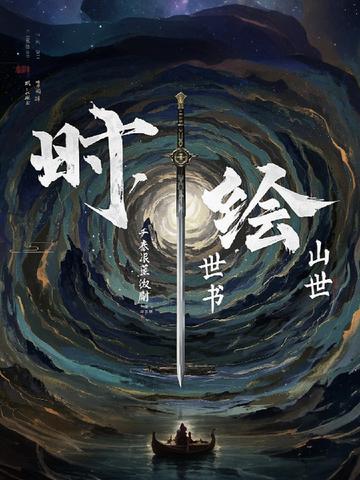
[The fire of civilization will never be extinguished, and one stroke can change three thousand worlds]
A sandstorm in the Mogao Grottoes in Dunhuang tore apart the fate of Wu Yang, a fifteen-year-old novice monk. When he pulled out the Yi An sword with Song lyrics flowing from the "Deer King Jataka", the pupils of the nine-colored deer were permanently fixed in his eyes - this was the "pupil of the abyss" that could see the origin of time and space, and it was also the fire of civilization buried by hundreds of schools of thought for thousands of years.
Six legendary women fell out of the broken mural: Li Qingzhao, who used poetry as a sword, Gongsun Auntie, who swallowed the sky with her Nuo face, and Cai Wenji, who split time and space with her piano... They are "conceptual embodiments" forgotten by the long river of history, each guarding the most dangerous crystallization of wisdom in China. And Wu Yang gradually discovered that every time he wielded his sword to rewrite reality, an inch of the murals in the Dunhuang caves peeled off, a section of Zhuque Street in the prosperous Tang Dynasty disappeared out of thin air, and the Hongqiao in the Northern Song Dynasty became a dim corner in the star map - it turned out that the entire Chinese civilization was sealed in the 129,600 "Episodes of the World".
[Cultivation is to steal fire, asking is to rebel against heaven]
When Wu Yang understood the seven heaven-defying traditions:
- Create an army by splashing ink with "Thousands of Miles of Rivers and Mountains"
- Freeze time with the string sounds of "Guangling San"
- Use "Tiangong Kaiwu" to cast concept weapons
- Let "The Song of Colorful Feathers" dance through the void
He must face the cruelest truth: those beloved beauties are all "civilization lesions" stripped away by hundreds of sages; the glorious Chang'an in the prosperous Tang Dynasty is just a mirage reflected by the Eye of the Abyss. And when he used the Green Lotus Sword Qi to cut through the fog of Guixu, what was waiting for him was actually his middle-aged self - the sitting Kun