In 1627, the Ming dynasty was like a battered ship with a thousand holes, tossed about by the stormy waves of history. At court, factional strife raged. The Donglin faction, the eunuch faction, and other powers schemed against one another, stopping at nothing to seize authority and profit. Government orders went unenforced, and politics had sunk into decay. Among the people, land was being seized on a massive scale. Wealthy landlords used every means to take what they wanted, driving countless farmers off the land they depended on and turning them into refugees. Natural disasters struck relentlessly. Years of drought in the north ruined the harvests, leaving the people hungry, while floods in the south destroyed homes. Disease spread, the dead lay everywhere, and life became unbearable. Beyond the frontier, the Later Jin grew ever stronger under the stewardship of Nurhaci and his son Hong Taiji, eyeing Ming territory and launching frequent raids. The Liaodong defenses were repeatedly thrown into crisis. Though the Ming army was large, unpaid wages, outdated equipment, and corrupt, incompetent commanders left its fighting strength uneven. It suffered repeated defeats against the Later Jin, while the border population languished in misery.
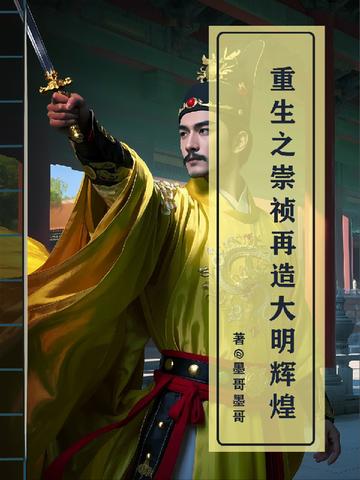
At this moment, Emperor Tianqi Zhu Youjiao died without an heir. By his final decree, the Prince of Xin, Zhu Youjian, inherited the throne, and the fate of the Ming rested entirely on the shoulders of this young ruler. The Chongzhen Emperor Zhu Youjian stood atop Coal Hill, gazing at the fire-ravaged capital and its suffering people, consumed by grief and despair. In the end, he took his own life on a crooked-necked tree. Yet, as if fate had intervened, Zhu Youjian was reborn in 1627, at the moment of his accession. In this life, he swore to rewrite history and save the Ming from ruin.