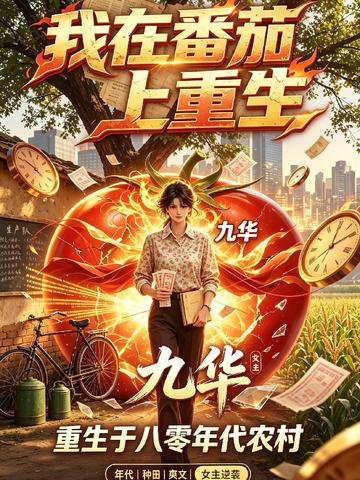
I Was Reborn on Tomato Novel
我在番茄上重生
- Status
- Completed
- Length
- 371k Words
- Genre
- Modern Romance
- Subgenre
- Workplace & Marriage
- Updated
- 1y ago
- Source
- Fanqie
Synopsis
More by this author
In booklists 7
Highly Rated 9.9: Engrossing, Highly Readable Novels
Looking for content similar to "Transmigrate into the 1960s for Thirty Years." Any genre is welcome.
Rated 9.9, 2026'S Surefire Hit 🔥🔥
Looking for stories similar to *Transmigrate Thirty Years into the Sixties*. Any genre.
I’ve Noticed a Problem: Most New Books Are Extremely Lackluster
The Most Amazing Pure Romance Stories Ever
I'm looking for books similar to *I'm a Pure-hearted College Guy, and I Fell in Love with a Crazy Villain After Getting Married First*. Ahhh, I seriously recommend it to everyone! It's pure romance, and it's so delicious. It's just not finished yet 😳 *covers face*... Does anyone know anything similar? Nothing set in the entertainment industry, please.
Any *Mysterious Lotus Casebook* Stories Where Everyone Is Reborn Except Li Lianhua?
Cultivation World, Powerful Female Lead, Many Male Leads
Looking for books similar to The Whole Sect Is Immortal and Full of Daoist Immortal Charm, and the Little Junior Sister Is Having Too Much Fun to Be Buried (My Heart Rides the Wind). No CP in the main story, but the extras should pair the female lead with each male lead. The female lead must be incredibly powerful.
A Newbie’s Novel Recommendations
Looking for books like Virtual Dimension. Let's follow and support each other!
Reader comments 50
Translated by Google Translate
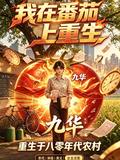
When the lights suddenly go out on New Year's Eve, Xin touches a life path that is not her own in the darkness. The laughter-loving Thirteen Gold uses an unexpected rebirth to unfold a picture intertwined with regret and redemption, fireworks and vitality for readers. "I Was Reborn on a Tomato" does not have earth-shattering fantasy settings, nor does it have any exaggerated and suspended counterattack points. However, it uses Jiuhua (Xin)'s second life to express ordinary people's questioning of fate and persistence in happiness. In the short-lived narrative, the most touching philosophy of life is hidden. The work's depiction of female growth is more delicate and profound. Jiuhua's rebirth is essentially an awakening of self-awareness. The original owner in the previous life lost herself in love and marriage, placed all her hopes for happiness on others, and eventually became a victim of fate; and after rebirth, Jiuhua, with the independent thinking of modern women, understands that "loving yourself is the beginning of a lifelong romance." She no longer blindly follows worldly expectations, dares to choose "one and two" when there are cracks in her marriage, dares to be honest about her inner ripples when she meets the person she loves, and dares to stick to her bottom line and pursuit in the trivialities of life. The chapters in the novel such as "The ice in the heart is melting" and "Opening the door to the heart" are not only the warming of the relationship between Jiuhua and Chun Shang, but also the process of her reconciliation with the past and self-acceptance. This kind of growth is not an overnight transformation, but a process of entanglement and relief, confusion and determination, gradually living the way you want, allowing readers to see: the power of women is never attached to someone's light, but comes from the sobriety and tenacity of the heart. The most poignant charm of the novel lies in its true interpretation of the meaning of "rebirth". Unlike many rebirth novels that focus on the ultimate pleasure of "slap in the face and revenge", Jiuhua in this work, with the sobriety of a modern soul and the weight of past life memories, returns to the life node that left the original owner covered with bruises. He went out to work at the age of nineteen and married the wrong lover at the age of twenty-three. The original owner's life ended with the regret of "thinking he had found someone to protect him from the wind and rain, but unexpectedly all the wind and rain came from him." After her rebirth, Jiuhua did not rush to set off a stormy counterattack. Instead, she dismantled the dilemma of life bit by bit in the daily life of daily necessities: she learned to see clearly the authenticity of people's hearts, broke away from the shackles of an unfortunate marriage, opened her heart when she met Chun Shang, and found her roots on the journey back to the countryside of Nanshi. This "slowly" growth rhythm makes rebirth no longer a pile of golden fingers, but an opportunity to live seriously - to correct wrong choices, cherish the neglected warmth, and rebuild trust in life amidst the smoke.
Jiuhua and Chun Shang just stood there, immersed in this peaceful and beautiful atmosphere, as if time had stopped for them. For the rest of their lives, they will become the tenderest care for each other in the fireworks. The ending is perfect, so much love!
Rebuilding oneself in the ruins of despair - the feminist awakening and narrative power of "The Rebirth of Jiuhua". At a time when rebirth themes are rampant, this book, with its cold writing style and profound core, has completed a transcendence of genre literature. It is not only a work that satisfies readers' emotions of "slapping a scumbag in the face", but also a mirror that reflects women's plight and self-redemption. The core tension of the novel comes from the widely circulated aphorism: "I thought you could protect me from the wind and rain, but I didn't expect that all the wind and rain came from you." This is not only a tragic summary of the heroine Jiuhua's previous life, but also the original driving force for the advancement of the story. The author cleverly uses the setting of "rebirth" not to create illusory perfection, but to give the protagonist a cruel "prophet" perspective. Jiuhua returns with complete memories, and every "decisive and brave" choice he makes is therefore full of resistance to the established destiny. Character creation is the most successful part of this book. The reason why Jiuhua's character is distinct and three-dimensional is that the author completely stripped away the aura of "Madonna" and allowed her to possess the reasonable anger, hatred and determination in human nature. Her unforgiveness does not stem from cruelty, but from self-protection and defense of dignity after enlightenment. This kind of character setting makes the "scumbag" plot break away from the low-level sense of satisfaction and sublimate it into a positive deconstruction of wrong relationships and unfair fate. From a structural point of view, the narrative context is clear and reasonable, the plot is rich and progressive, and it perfectly serves the display of the character's arc. What we see is the complete transformation process of a little girl from placing her hopes on others, to recognizing the reality, and finally rooting her strength in her own heart. The value of this book lies in the fact that it explores a profound proposition in the most direct way: when the shelter becomes the eye of the storm, how much courage does a person need to tear down the ruins with his own hands and rebuild his own indestructible kingdom on top of it? Worth recommending to friends around me! ! !
The most rare thing about "My Rebirth on a Tomato" is that the author uses a fantasy setting of rebirth to explore the most profound identity and self-growth. In the collision of two souls, the heroine completes her self-reshaping, and allows readers to follow her to re-examine marriage, life and self-worth. There are no floating golden fingers, only the most real life and the most determined growth, so that every woman struggling in life can see her own shadow and gain the strength to move forward. It is a good work with warmth and depth!
This is not a novel, to be precise, it is more like a reflection on life, or a prose poem about a woman's footsteps! The writing is delicate, and the words and sentences are full of romance, warmth, struggle, and hesitation, and also contain the philosophy of life, survival, and emotion! Borrowing a few meaningful phrases from the novel, it makes people think: If the years were written into poetry, the wind of the Great Wall and the sand of Dunhuang would always be signed Yanhuang! I have seen the solitary smoke in the desert and heard the drizzle in the south of the Yangtze River. The most unforgettable thing is the smoke from my hometown! Time was so slow back then, so slow that you could clearly see the trajectory of every particle of dust. Now life is like a runaway train! What is written between the lines in this novel is the author's half-life journey. It is very touching and very good! Thank you for sharing such a beautiful story!
A self-salvation spanning time and space. When Jiuhua woke up in the hospital bed, strange memories poured in like a tide. ——The fireworks in southern villages, the hardships of working life, and the background of marriage Awakening after rebellion and rebirth. This novel depicts with delicate brushstrokes It tells the story of an ordinary woman's struggle and transformation in the reincarnation of fate. Jiuhua's story is not a simple "cheating and counterattack", but a story about Jiuhua's past life. Regrets and pain, re-evaluating life after rebirth. From family to Career, every step of choice is full of realistic tension.
At a time when there are so many rebirth articles, "Jiuhua Rebirth" has just torn a different path. While most reborn heroines are still following the old path of "atonement and cleansing" and "Mother's forgiveness", Jiuhua returns with the scars and hatred of her previous life. Her goal is never reconciliation, but to personally pull down those who pushed her into the abyss. This "no forgiveness, no looking back" cruelty accurately pokes the resentment of emotional betrayal among modern readers. The novel starts with a direct hit on the pain point: the person who promised to protect from the wind and rain turns out to be the culprit of creating the wind and rain. The author uses sharp strokes to describe Jiuhua's transformation from full of hope to complete despair, and then from despair to forge a steely will. Each of her counterattacks is crisp and clear, without any sloppiness. The exciting plot of "slapping the scumbag in the face" allows readers to release all the accumulated frustration. This is not a pretentious rebirth article, but a "spiritual antidote" for those who have been emotionally hurt. It allows us to see the power of women after awakening, and also understand that there is no need to forgive some injuries. I finally finished reading it, it was so exciting!
Although it is back to the beginning, it is not about those crazy pleasures and grudges or the invincible joy, but more about the accumulation and reflection of life. There is great wisdom in casual thinking. Suddenly, I remembered the Vanilla Mountain I had seen many years ago. Worthy of recommendation and five-star praise.
With poetic touches, the story of a woman's rebirth in two lives is written. Her "unforgiveness" is not hatred, but the clearest confirmation of self-sovereignty. Breakthroughs in individual life, reflections on children's education, reflections on marriage and family, and feelings about distant home and country are tenderly intertwined in the narrative, and personal healing is sublimated into the most moving expectation of "completeness."
It tells the suspenseful story of a woman who mysteriously time travels into the body of another woman on New Year's Eve. The warm domestic scene at the beginning suddenly turns dark, leading to the mystery of the protagonist's misplaced identity. Through the flashback of Jiuhua's memory, it shows the tragic life of a rural girl from full of hope to disillusionment in marriage. The novel skillfully interweaves reality and fantasy, exploring the themes of women's fate and identity. The author uses simple brushwork to depict the cruelty and tenderness of life, making people feel the heaviness of reality in the suspense. Very interesting, I finished reading it in one sitting. Waiting for the author to update!