During the Zhaoyuan period, there were many undercurrents in the dynasty.
The corpse of a ghost bride hangs in a locust tree, the bones of the Yellow River play the sound of death, and the stand-in at the border starts a war...
Behind the mystery is the chess game of life and death between the Jianghu and the court.
"Qingnang Shu" - a holy book that is said to be able to cure all diseases, is actually the secret of the dragon veins of the previous dynasty. The Immortality Sect uses "life-extending medicine" to control the powerful in an attempt to subvert the country; the royal family conceals the truth about the "immortality experiment", and the three provinces and six departments are constantly fighting for power; the three major forces in the rivers and lakes each have their own agendas: Tiangongfang's mechanism to quench poison, Baicaogu's bewitchment to deceive the mind, and Wuchangsi's hidden murderous intentions.
When the three of them met, they started out with suspicion and finally asked for their fate:
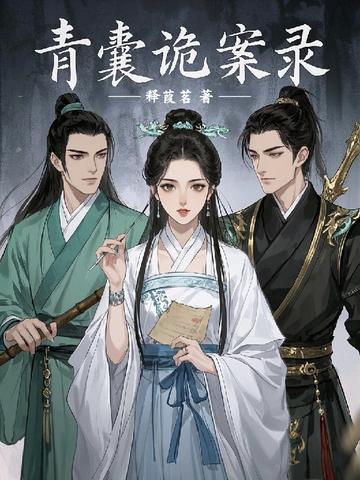
It is said that there is no time for the cold-faced poisonous doctor, the silver needle hides and kills, it can cure hundreds of poisons and shorten one's life;
Xie Changli, a romantic storyteller, whose jade flute turns into a blade, who uses all his mechanisms to avenge blood;
Yan Hengzhou is guilty of sealing the swordsman, Mo Dao kills evildoers, and kills his master to protect the common people.
From the ghost's marriage demanding life to the appearance of dragon veins, the hypocritical veil of "loyalty, filial piety, justice" is torn apart.
The key of the mechanism opens the earth's veins, the poisonous needle burns away the emperor's plans, and the Mo Dao cuts off the dream of immortality——
The blood contract is an oath to break the deadlock together.
No one is innocent under the conspiracy; between life and death, only the bond remains.
"Silver needles can save people, but they can also kill people's hearts - there are all kinds of poisons in the world, but how can they be as dangerous as the human heart?"
"The mechanism locks up all the mysteries in the world, and the jade flute blows away lies in the pillow - the truth I want is not in the script."
"Mo Dao can cut off the shackles, but it can't cut off the sins - if you can't protect the common people, what's the use of innocence?"
Reader comments
"The Record of the Green Bag": A trial of human nature in a conspiracy world
If the world is like a chess game, then everyone in "Qing Nang's Secret Case" is an involuntary chess piece. The undercurrent of the dynasty, the death of a ghost in marriage, the tragedy of bones... This novel uses seven bizarre cases to weave a web of conspiracy across the court and the rivers and lakes, and the three protagonists - the cold-faced poison doctor, the romantic storyteller, and the sin-seal swordsman are the sharp blades that tear open this web.
Behind the mystery is the human heart, which is more sinister than ghosts and gods.
From "The Ghost Bride's Corpse Hanging in a Locust Tree" to "Thousands of Buddhas Weeping Blood", each case is cloaked in the guise of strange forces and chaos, but underneath lies the naked evil of human nature. Corrupt officials use the "Locust God" to cover up corruption, powerful people use "immortality medicine" to control people's hearts, and the royal family uses people's lives to make elixirs... The author is very good at playing "reversal": you think the murderer is a ghost, but he is actually a human; you think he is saving others, but in fact he is killing people. In particular, lines such as "A silver needle can save people, but it can also kill people's hearts" and "A knife is for protecting the road, not for killing" make the character's struggle heart-wrenching and touching.
Three "madmen", a gamble to redeem each other
Yun Wuqi, Xie Changli, and Yan Hengzhou, this trio can be called "the beginning of hell." A poisonous doctor who saves people and shortens their lives, a storyteller who bears the blood feud of destroying his family, and a swordsman who kills his master and betrays his family. When they first met, they were wary of each other and even exchanged swords against each other. But as the case progresses, their relationship unfolds like peeling an onion: Xie Changli's romantic mask hides the blood and tears of the Qianji Sect's destruction, Yan Hengzhou's Mo Dao is engraved with the contradiction between "protecting the road" and "killing", and Yun Wuqi's silver needle not only saves lives, but also pierces the hypocrisy of imperial power. The most poignant thing is their daily routine of "fighting each other while fighting each other" - Xie Changli ridiculed Yan Hengzhou that "a reckless man only knows how to hack doors", and then turned around and used machine skills to save him; Yun Wuqi treated Yan Hengzhou's injuries with a cold face, but secretly gave him the broken pages of the green bag book to treat his heart ailments. This kind of "life and death trust" bond is more tense than a straightforward love line.
The arena is not about fighting and killing, it is a Shura field where people are so sophisticated.
The Jianghu forces in the novel are very exciting: Tiangongfang's poison-quenching weapons, Baicao Valley's poison-venom mutualism, Wuchangsi's assassination secrets, each sect hides shady secrets. And the hidden line of the "Immortality Cult" takes power and tactics to the extreme - some people do whatever it takes to get revenge, and some want to use the truth to overthrow the dynasty. The most unique thing is the setting of the "Qing Nang Book", which appears to be a medical book, but is actually a diagram of the dragon veins of the previous dynasty, directly tying the fate of the three people to the world. When Yun Wuqi finally faced the choice of "cutting off love and saving the common people" or "die together with his companions", the feeling of tearing was heart-wrenching and passionate.
Who should read it?
If you like the intrigues of the court like "Nirvana in Fire" or the passion of the world like "Young Song Xing", this book will definitely suit your appetite. The reasoning of the case is not mind-numbing but strange enough, and the characters are vivid and memorable, especially the growth of the "Iron Triangle" from stabbing each other to fighting back-to-back. It can be called the Chinese version of the "Avengers". The ending is wonderfully left blank - Yun Wuqi falls asleep, Xie Changli goes to the Miao border, and Yan Hengzhou travels to the Turks alone, but the Mo knife on the desk and the sound of the flute outside the window hint that the story is not over yet. This kind of "goodbye" aftertaste is more memorable than a happy reunion.
In short, "The Secret Case of the Green Bag" is like a pot of strong wine. The first taste is the spiciness of suspense and mystery, but after a closer taste, it is full of the bitterness and sweetness of the good and evil of human nature. After all, what is more terrifying than the Ghost Bride is cannibalistic ethics, and what is more poisonous than the elixir of immortality is inflated ambition. What can break the situation is never one person's silver needle, mechanism or sword, but the trust of three "sinners" who entrust their lives back to back.
"The Record of the Green Bag": A trial of human nature in a conspiracy world If the world is like a chess game, then everyone in "Qing Nang's Secret Case" is an involuntary chess piece. The undercurrent of the dynasty, the death of a ghost in marriage, the tragedy of bones... This novel uses seven bizarre cases to weave a web of conspiracy across the court and the rivers and lakes, and the three protagonists - the cold-faced poison doctor, the romantic storyteller, and the sin-seal swordsman are the sharp blades that tear open this web. Behind the mystery is the human heart, which is more sinister than ghosts and gods. From "The Ghost Bride's Corpse Hanging in a Locust Tree" to "Thousands of Buddhas Weeping Blood", each case is cloaked in the guise of strange forces and chaos, but underneath lies the naked evil of human nature. Corrupt officials use the "Locust God" to cover up corruption, powerful people use "immortality medicine" to control people's hearts, and the royal family uses people's lives to make elixirs... The author is very good at playing "reversal": you think the murderer is a ghost, but he is actually a human; you think he is saving others, but in fact he is killing people. In particular, lines such as "A silver needle can save people, but it can also kill people's hearts" and "A knife is for protecting the road, not for killing" make the character's struggle heart-wrenching and touching. Three "madmen", a gamble to redeem each other Yun Wuqi, Xie Changli, and Yan Hengzhou, this trio can be called "the beginning of hell." A poisonous doctor who saves people and shortens their lives, a storyteller who bears the blood feud of destroying his family, and a swordsman who kills his master and betrays his family. When they first met, they were wary of each other and even exchanged swords against each other. But as the case progresses, their relationship unfolds like peeling an onion: Xie Changli's romantic mask hides the blood and tears of the Qianji Sect's destruction, Yan Hengzhou's Mo Dao is engraved with the contradiction between "protecting the road" and "killing", and Yun Wuqi's silver needle not only saves lives, but also pierces the hypocrisy of imperial power. The most poignant thing is their daily routine of "fighting each other while fighting each other" - Xie Changli ridiculed Yan Hengzhou that "a reckless man only knows how to hack doors", and then turned around and used machine skills to save him; Yun Wuqi treated Yan Hengzhou's injuries with a cold face, but secretly gave him the broken pages of the green bag book to treat his heart ailments. This kind of "life and death trust" bond is more tense than a straightforward love line. The arena is not about fighting and killing, it is a Shura field where people are so sophisticated. The Jianghu forces in the novel are very exciting: Tiangongfang's poison-quenching weapons, Baicao Valley's poison-venom mutualism, Wuchangsi's assassination secrets, each sect hides shady secrets. And the hidden line of the "Immortality Cult" takes power and tactics to the extreme - some people do whatever it takes to get revenge, and some want to use the truth to overthrow the dynasty. The most unique thing is the setting of the "Qing Nang Book", which appears to be a medical book, but is actually a diagram of the dragon veins of the previous dynasty, directly tying the fate of the three people to the world. When Yun Wuqi finally faced the choice of "cutting off love and saving the common people" or "die together with his companions", the feeling of tearing was heart-wrenching and passionate. Who should read it? If you like the intrigues of the court like "Nirvana in Fire" or the passion of the world like "Young Song Xing", this book will definitely suit your appetite. The reasoning of the case is not mind-numbing but strange enough, and the characters are vivid and memorable, especially the growth of the "Iron Triangle" from stabbing each other to fighting back-to-back. It can be called the Chinese version of the "Avengers". The ending is wonderfully left blank - Yun Wuqi falls asleep, Xie Changli goes to the Miao border, and Yan Hengzhou travels to the Turks alone, but the Mo knife on the desk and the sound of the flute outside the window hint that the story is not over yet. This kind of "goodbye" aftertaste is more memorable than a happy reunion. In short, "The Secret Case of the Green Bag" is like a pot of strong wine. The first taste is the spiciness of suspense and mystery, but after a closer taste, it is full of the bitterness and sweetness of the good and evil of human nature. After all, what is more terrifying than the Ghost Bride is cannibalistic ethics, and what is more poisonous than the elixir of immortality is inflated ambition. What can break the situation is never one person's silver needle, mechanism or sword, but the trust of three "sinners" who entrust their lives back to back.