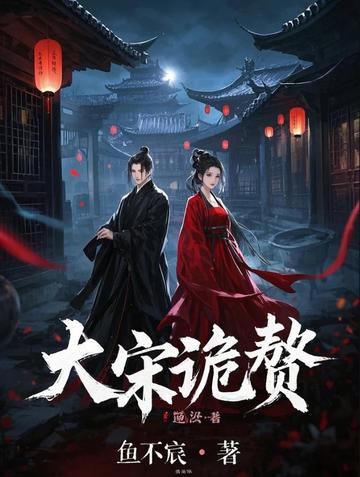
During the Xuanhe period of the Northern Song Dynasty, Lu Hanchuan, the son-in-law of Kaifeng Mansion, was involved in a mysterious case because of a charred corpse carved with yin and yang embroidery. The poor scholar who originally wanted to live a peaceful life was forced to take up the soul-breaking pen. In the ghost market of Bianjing and the undercurrent of the court, he got a glimpse of the national destiny that lasted for three hundred years.
He recognized that the tattoo of "Three Corpses Panning the Moon" on the palm of the charred corpse was exactly the same as the mark under the collarbone of his wife Su Wanyun. When he discovered that the portraits of "chaste martyrs" enshrined in the Sufu ancestral hall contained the remains of five infants, and when he saw the blood and tears written in Xixia script oozing from the golden pillars of the Chui Gong Hall, Lu Hanchuan finally understood that this chess game based on human life had already been settled when Taizu drank wine and released his military power.
From the missing Hongqiao salesman in "Along the River During the Qingming Festival" to the living figurines in the Genyue rockery; from the demon monk's skin sealed in the underground palace of Xiangguo Temple to the cast iron Buddha head sunk at the bottom of the Yellow River. Every time a strange murder case is solved, the broken pages of "Tiangong Foreign Objects" in Lu Hanchuan's hands are stained three-thirds more with blood - it is actually a letter of advice written by his father-in-law Su Yan with corpse stains before his death.
And when he opened Su Wanyun's dowry gilt box, he found half a broken tiger charm lying in the secret compartment, which matched perfectly with the Zhenguo Jade Gui unearthed from the Xixia royal mausoleum...