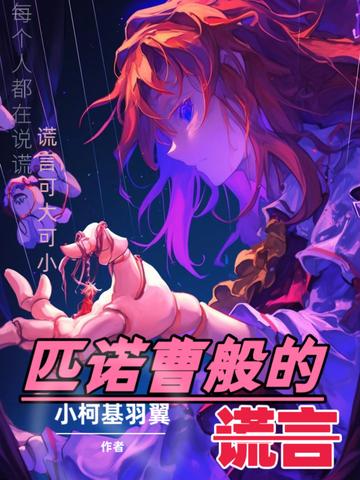
No one in this world is a good person. Who can win the final victory and escape unscathed? Emotionally, what looks like a winner is actually the biggest loser.
Home, could it be that you lied to me and I set up a trap? The intertwining of lies and love has made this love a mess.
Reader comments
The code writer is here for a visit
Very good, I like the character Jiang Mengyao the most
This article vividly presents the spiritual world of a multi-dimensional knowledge explorer from a first-person perspective, showing the integration of rationality and sensibility, traditional divination and modern psychology. The following is an in-depth analysis from five dimensions:
1. Narrative structure analysis
The article adopts a two-line intertwined narrative structure:
1. Bright lines: facial analysis case
- Taking specific consulting cases as the starting point, completely presenting the entire process from case reception to analysis
- Interspersed with professional terminology of physiognomy (brows, nasolabial folds, etc.) To enhance the credibility of knowledge
- Verify the analysis effect through customer feedback and form a narrative closed loop
2. Hidden line: Personal growth trajectory
- Psychological Enlightenment → Tarot Card Exploration → Micro-expression Research → Interdisciplinary Integration
- Childhood Spider Observation → Youth Academic Exploration → Maturity Methodological Innovation
- The knowledge system shows a spiral development trajectory
2. Character creation
Jiang Mengyao's image has three contradictory unity:
1. The symbiosis of reason and sensibility
- Left brain: micro-expression research/psychological theory/logical reasoning
- Right brain: music perception/tarot symbolism/intuitive insight
- Contradictions: the coldness of the spider experiment and the subsequent reverence for life
2. The ferryman between tradition and modernity
- Inheritance: ancient books on physiognomy/tarot history/oriental physiognomy
- Innovation: modern psychological framework/scientific methodology
- Breakthrough point: transforming occultism into a psychological suggestion tool
3. Quantum states of geniuses and madmen
- Social perception: risk of being misunderstood as a "god"
- Self-awareness: sober rebel positioning
- Sign of growth: from "a little understanding" to system knowledge architecture
3. Deconstruction of knowledge system
1. Physiognomy system:
- Build an analysis model containing 12 facial areas (forehead/eyebrows/eyes/nose, etc.)
- Each feature corresponds to dual interpretation (physiological characteristics → psychological mapping)
- Emphasis on probability theory rather than determinism (statistical expression of "market appearance")
2. Tarot cognitive evolution:
- Tool attribute transformation: divination → psychological mirroring → decision-making aid
- Explanatory framework update: mysticism → Jungian principle of synchronicity → cognitive psychology
- Practical application upgrade: personal confusion → interpersonal counseling → group psychological intervention
3. Methodological integration:
- Create a "Trinity" analysis system:
Observation (face/microexpression)
Guidance (Tarot/Role Play)
Reconstruction (psychological theoretical framework)
4. Characteristics of language arts
1. Literary treatment of professional terms:
- Convert "pupil contraction" into "silent light"
- "Skin conductive response" is a metaphor for "healthy glow"
- Concrete "cognitive bias" into the "Glass Spider Experiment"
2. Multimodal knowledge metaphor:
-Musical synaesthesia: "The depth of the cello" refers to personality traits
- Detective film mapping: dramatize the consultation process into suspense and mystery solving
- Web-weaving image: The spider web symbolizes the process of building a knowledge system
3. Create rhetorical tension:
- Oxymoron: "cold passion" (nose analysis)
- Quantum metaphor: "The superposition of genius and madman"
- Space metaphor: "Adventure at the edge of knowledge"
5. Critical Perspective of Modernity
1. Mysticism disenchantment:
- Deconstruct the divination properties of Tarot and strengthen its psychological projection function
- Incorporate physiognomy into the study of non-verbal communication
- Use the concept of "choice" to dispel the determinism of fate
2. Scientific rational reflection:
- Revealing the limitations of micro-expression research (1/20 second capture problem)
- Questioning the external validity of the laboratory environment (the need to "spark the atmosphere")
- Emphasize the complementary value of qualitative research to quantitative analysis
3. Exploration of cognitive boundaries:
- Put forward the value proposition of "abnormal cognition"
- Demonstrate the cross-border advantages of knowledge nomads
- Build a "misunderstood innovator" identity
This article is essentially an epic of spiritual growth of intellectuals, reflecting the collision and integration of traditional wisdom and modern science in contemporary society through personal experience. Its core value lies in: constructing a rational explanation framework for mystical knowledge, injecting humanistic warmth into scientific methodology, and ultimately pointing to a more inclusive picture of human cognition. This kind of cross-border intellectual courage is exactly the fertile ground for innovative thinking.
The code writer is here for a visit
Very good, I like the character Jiang Mengyao the most This article vividly presents the spiritual world of a multi-dimensional knowledge explorer from a first-person perspective, showing the integration of rationality and sensibility, traditional divination and modern psychology. The following is an in-depth analysis from five dimensions: 1. Narrative structure analysis The article adopts a two-line intertwined narrative structure: 1. Bright lines: facial analysis case - Taking specific consulting cases as the starting point, completely presenting the entire process from case reception to analysis - Interspersed with professional terminology of physiognomy (brows, nasolabial folds, etc.) To enhance the credibility of knowledge - Verify the analysis effect through customer feedback and form a narrative closed loop 2. Hidden line: Personal growth trajectory - Psychological Enlightenment → Tarot Card Exploration → Micro-expression Research → Interdisciplinary Integration - Childhood Spider Observation → Youth Academic Exploration → Maturity Methodological Innovation - The knowledge system shows a spiral development trajectory 2. Character creation Jiang Mengyao's image has three contradictory unity: 1. The symbiosis of reason and sensibility - Left brain: micro-expression research/psychological theory/logical reasoning - Right brain: music perception/tarot symbolism/intuitive insight - Contradictions: the coldness of the spider experiment and the subsequent reverence for life 2. The ferryman between tradition and modernity - Inheritance: ancient books on physiognomy/tarot history/oriental physiognomy - Innovation: modern psychological framework/scientific methodology - Breakthrough point: transforming occultism into a psychological suggestion tool 3. Quantum states of geniuses and madmen - Social perception: risk of being misunderstood as a "god" - Self-awareness: sober rebel positioning - Sign of growth: from "a little understanding" to system knowledge architecture 3. Deconstruction of knowledge system 1. Physiognomy system: - Build an analysis model containing 12 facial areas (forehead/eyebrows/eyes/nose, etc.) - Each feature corresponds to dual interpretation (physiological characteristics → psychological mapping) - Emphasis on probability theory rather than determinism (statistical expression of "market appearance") 2. Tarot cognitive evolution: - Tool attribute transformation: divination → psychological mirroring → decision-making aid - Explanatory framework update: mysticism → Jungian principle of synchronicity → cognitive psychology - Practical application upgrade: personal confusion → interpersonal counseling → group psychological intervention 3. Methodological integration: - Create a "Trinity" analysis system: Observation (face/microexpression) Guidance (Tarot/Role Play) Reconstruction (psychological theoretical framework) 4. Characteristics of language arts 1. Literary treatment of professional terms: - Convert "pupil contraction" into "silent light" - "Skin conductive response" is a metaphor for "healthy glow" - Concrete "cognitive bias" into the "Glass Spider Experiment" 2. Multimodal knowledge metaphor: -Musical synaesthesia: "The depth of the cello" refers to personality traits - Detective film mapping: dramatize the consultation process into suspense and mystery solving - Web-weaving image: The spider web symbolizes the process of building a knowledge system 3. Create rhetorical tension: - Oxymoron: "cold passion" (nose analysis) - Quantum metaphor: "The superposition of genius and madman" - Space metaphor: "Adventure at the edge of knowledge" 5. Critical Perspective of Modernity 1. Mysticism disenchantment: - Deconstruct the divination properties of Tarot and strengthen its psychological projection function - Incorporate physiognomy into the study of non-verbal communication - Use the concept of "choice" to dispel the determinism of fate 2. Scientific rational reflection: - Revealing the limitations of micro-expression research (1/20 second capture problem) - Questioning the external validity of the laboratory environment (the need to "spark the atmosphere") - Emphasize the complementary value of qualitative research to quantitative analysis 3. Exploration of cognitive boundaries: - Put forward the value proposition of "abnormal cognition" - Demonstrate the cross-border advantages of knowledge nomads - Build a "misunderstood innovator" identity This article is essentially an epic of spiritual growth of intellectuals, reflecting the collision and integration of traditional wisdom and modern science in contemporary society through personal experience. Its core value lies in: constructing a rational explanation framework for mystical knowledge, injecting humanistic warmth into scientific methodology, and ultimately pointing to a more inclusive picture of human cognition. This kind of cross-border intellectual courage is exactly the fertile ground for innovative thinking.