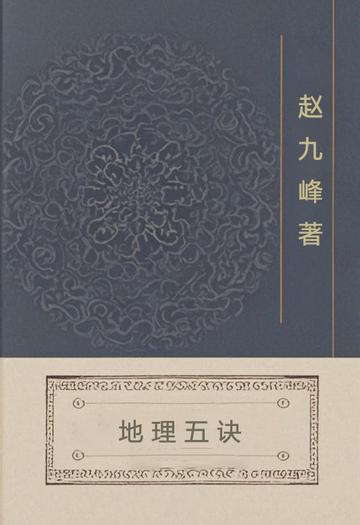
"Five Secrets of Geography" was written by Zhao Jiufeng during the Qianlong period of the Qing Dynasty. The book is divided into eight volumes. It organizes and excerpts the famous Feng Shui works from the Tang and Song dynasties, and develops and supplements the theory. It can be called the most concise integrated book and reference book in the field of Feng Shui. The book is characterized by its systematic induction. Dragons, caves, sand, and water are classified and analyzed separately. It uses the theories in theory as an index to coordinate the content of each chapter and illustrate some of them with pictures to enhance its practicality. Although the book focuses on the Feng Shui of Yin Houses, it also has a good reference value for the location of Yang Houses, especially the environmental views embodied in it, which are worthy of specific study and interpretation. Through a comprehensive review and analysis of the book "Five Secrets of Geography", this article systematically summarizes the theoretical system and framework content of "Five Secrets of Geography", expands the development process of Feng Shui behind the compilation of the book, deconstructs the theoretical content of Feng Shui introduced in the book, and interprets the environmental view from the perspective of human settlement environment science.