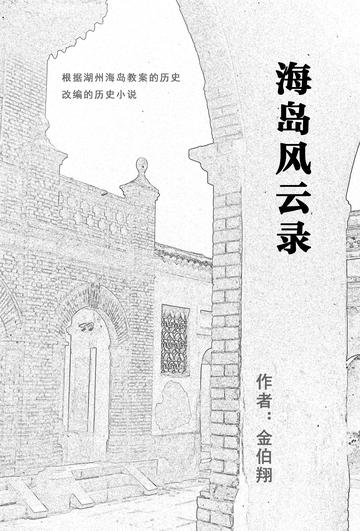
In 1902, the late Qing Dynasty was in turmoil, and Huzhou City was struggling with invasion by foreign powers and natural disasters. During the spring flood season, the Tiaoxi mountain torrent and the Qianjiang River tidal backflow turned the "island" platform in the northeast of the city into a lake. The American Southern Supervisory Committee took the opportunity to collude with Zhu Maoqing, the magistrate of Gui'an County, to seize the "island" on the grounds of "unowned wasteland" and intend to build a church here. This piece of land, which carries the history of pond-building by King Qian of Wu and Yue and the ruins of official fields in the Song Dynasty, is not only the basis of livelihood for the people of Huzhou, but also a symbol of a thousand-year cultural heritage.
The news spread and the whole city was outraged. Silk merchants rushed into the concession holding silk banners that read "Give me back the rooftop for sacrifice." Old teagoers in the teahouse slammed the table and cursed the ambitions of foreigners. Zhao Danian, the leader of the bookstore, turned his grief and anger into a ditty: "Gaodun used to be a place where children played, but now foreigners build a fortress wall." The young girl Ah Qiao carries the fragments of the ancestral "Silkworm Weaving Picture" and looks for the strength to fight in the ruins; Shen Jiaben, the criminal department of the capital, holds on to the "Great New Criminal Code" and tries to protect the country with legal weapons. However, the church and the government secretly colluded to create trouble, and a war to defend culture and land quietly began.
When the floods overflow the Song Dynasty boundary stone, and when silk banners and church crosses confront each other in the rain, can the people of Huzhou hold on to the last line of defense? "Island Storm" uses silk as a link to connect the epic of the survival of the family and the country, showing the legend of resistance written by the people at the bottom of the late Qing Dynasty with wisdom, blood and tears.