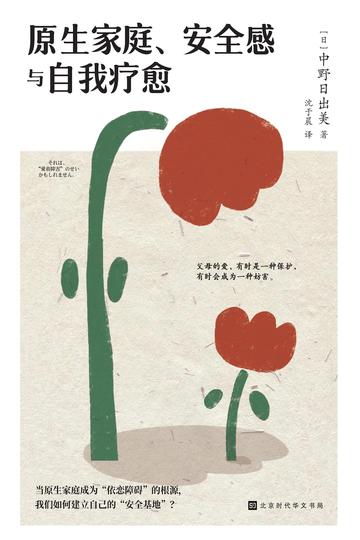
Excessive self-blame, vulnerability, lack of trust in others, social avoidance, self-doubt... These are all manifestations of "attachment disorder", that is, a lack of security caused by the family of origin. How to repair the scars caused by the original family and regain a sense of security, this book provides the solution! The author Hidemi Nakano starts with the key crux of "attachment disorder", lists large and small interpersonal distress and self-condemnation phenomena, and introduces how "attachment disorder" arises, how it manifests as insecurity and continues to affect a person's psychological and emotional state. It not only raises questions and discovers the root causes, but also solves them. Nakano Hidemi's original "Reconstructing Attachment Therapy" helps readers start thinking from the way of companionship of their original family, review their growth process, discover the source of insecurity, and build their own "security fortress" with a positive attitude. Only then can they get out of the haze of "attachment disorder" and lack of security, constantly improve themselves, and move toward a happy life.
Reader comments
This book is really good. It made me realize why I am so negative now and how to solve it. It is very touching because I also have a dependence disorder that affects my life and study. It took me five years to start self-help from depression to a more serious depression. It is really difficult, but it doesn't matter. Take your time.
According to my personal understanding, the main text of this book first discusses four types of children's attitudes towards parents and five types of problem parents, and then uses three chapters (2, 3, 4) to talk about the harm of the three main problems. Chapter 5 is about ways to seek help from the outside, Chapter 6 is about ways to heal yourself from within, Chapter 7 talks about how to help others heal attachment disorders, and Chapter 8 still talks about ways to self-heal attachment disorders, but it has a different perspective than Chapter 6 and is more general and oriented. The harms introduced after the five types of problematic parents at the beginning are also mostly different. I personally think that we can think about the respective impacts of these five types of parents (Chapter 2, 3, and 4). Many people seem to be uncomfortable nowadays, but only a small part of them feel that something is wrong with them, and from what I have observed, their solution is to keep making new friends or talking instead of finding a solution. That is reasonable but not good.
You don't need to compare with anyone
You are unique in this world.
It is a very good book, which introduces many different attachment types, tells us what kind of love is healthy love, what kind of love is selfish love, how to put our own hearts in order and take care of the child who has been injured since childhood. I feel I have benefited a lot from reading this book
Do you think this book is pretty good?
It's super practical. I learned a lot. The above techniques are also very practical. I'm grateful for encountering this book.
This book is really good. It made me realize why I am so negative now and how to solve it. It is very touching because I also have a dependence disorder that affects my life and study. It took me five years to start self-help from depression to a more serious depression. It is really difficult, but it doesn't matter. Take your time.
According to my personal understanding, the main text of this book first discusses four types of children's attitudes towards parents and five types of problem parents, and then uses three chapters (2, 3, 4) to talk about the harm of the three main problems. Chapter 5 is about ways to seek help from the outside, Chapter 6 is about ways to heal yourself from within, Chapter 7 talks about how to help others heal attachment disorders, and Chapter 8 still talks about ways to self-heal attachment disorders, but it has a different perspective than Chapter 6 and is more general and oriented. The harms introduced after the five types of problematic parents at the beginning are also mostly different. I personally think that we can think about the respective impacts of these five types of parents (Chapter 2, 3, and 4). Many people seem to be uncomfortable nowadays, but only a small part of them feel that something is wrong with them, and from what I have observed, their solution is to keep making new friends or talking instead of finding a solution. That is reasonable but not good.
You don't need to compare with anyone You are unique in this world.
It is a very good book, which introduces many different attachment types, tells us what kind of love is healthy love, what kind of love is selfish love, how to put our own hearts in order and take care of the child who has been injured since childhood. I feel I have benefited a lot from reading this book
Do you think this book is pretty good?
It's super practical. I learned a lot. The above techniques are also very practical. I'm grateful for encountering this book.